Higher ed co-op guide: A faster path to compliant, high-quality campus improvements

.svg)
Key Takeaways
- Traditional RFP timelines are slowing campus improvements. Procurement timelines of 9–18 months delay critical improvements, limiting institutions’ ability to attract prospective students and faculty and sustain student satisfaction.
- Higher education co-op purchasing offers a faster, compliant alternative. Pre-negotiated co-op contracts enable schools to access vetted facility services in weeks while supporting competitive bidding and procurement requirements.
- Speed does not mean sacrificing quality or oversight. Co-op agreements are competitively awarded, fully vetted, and designed to deliver the same high-quality outcomes.
- Nearly all higher education institutions have access to co-ops. Aligning facilities and procurement around these existing co-ops unlocks immediate progress.
- Co-ops support both immediate needs and long-term strategy. Institutions can address urgent maintenance issues while also advancing sustainability goals, infrastructure upgrades, and campus experience initiatives.
- The fastest-moving institutions are rethinking procurement. Universities making the most progress are choosing pathways that allow them to act quickly without cutting corners—and co-ops are central to that shift.
Transcript
Higher education leaders (and K-12 leaders) are operating under a new set of expectations. Presidents and boards are setting ambitious sustainability goals. Students and communities are more vocal than ever about the quality of campus environments. Aging infrastructure demands capital investment, while budgets and facility teams remain stretched.
Top pressures facing higher ed facilities leaders
| Capital renewal backlog | Ambitious sustainability goals | Increased scrutiny |
|---|---|---|
| The backlog  of capital renewal need is over $140/gsf. of capital renewal need is over $140/gsf. |
Achieving carbon neutrality  is a key focus, with many schools rallying around the UN’s 2030 deadline. is a key focus, with many schools rallying around the UN’s 2030 deadline. |
Students, visitors, and the local community are increasingly vocal about the quality of the campus and its amenities. |
As facilities leaders are expected to help execute long-term institutional vision such as carbon neutrality, asset performance, and student experience, they must also keep cleaning, maintenance, and day-to-day operations running smoothly.
As needs evolve, modern institutions turn to higher education procurement processes that support faster, more integrated execution across the campus environment.
Why traditional RFP procurement slows campus improvements
Traditional RFPs play a critical role in governance and accountability, and often work well for discrete, transactional purchases. However, today’s campuses seek faster execution for integrated cleaning and maintenance services, and the time required for traditional higher education procurement can slow momentum even when all parties are operating effectively.
Developing an RFP for campus-wide facility services is a time-intensive process, particularly when multiple campuses, service lines, or evolving requirements must be aligned. Once issued, procurement teams must manage pre-bid meetings, extensive site walks, and much more. Evaluations alone can take months.
Higher education co-operative purchasing cuts months off procurement
Even when institutions invest a year or more into the process, outcomes aren’t guaranteed. Requirements change. Campuses are added. Budgets shift. Entire RFPs are rewritten,—or abandoned,—after significant time and effort.
University leaders feel this acutely. Long procurement cycles push strategic initiatives perpetually into future planning cycles.
The result is a paradox: processes designed to ensure good stewardship can also slow the progress institutions are responsible for delivering.
How co-operative purchasing improves university facility services procurement
Co-operative purchasing agreements offer higher education institutions a more effective way to procure facility services—not just products—without sacrificing compliance or quality.
Co-ops conduct competitive solicitations on behalf of their members. They issue RFPs, evaluate vendors, negotiate pricing, and establish master agreements that meet procurement requirements. Member institutions can then access those contracts directly, without running their own RFPs.
For higher education, the benefits are immediate:
Speed
What often takes 9–18 months through a traditional RFP can be executed in weeks.
Compliance
Co-operative procurement agreements support competitive bidding, transparency, and procurement requirements.
Cost Efficiency
Collective purchasing improves pricing by aggregating demand and negotiating lower prices.
Higher education is increasingly discovering that comprehensive facility services—custodial, grounds and landscaping, engineering, energy management, EV infrastructure, and more—are fully available through co-op contracts.
In many cases, university facility services procurement teams already know this. Facilities and operations teams often don’t. When those groups connect, a faster path forward becomes immediately visible.
The question of quality
For higher education leaders, quality, transparency, and accountability remain non-negotiable.
Co-op pathways deliver on all three.
Cooperative procurement agreements improve quality by embedding higher standards at the front of the purchasing process and sustaining them over time. Vendors are selected through rigorous, competitive evaluations that assess experience, performance history, and service capability—not just price—ensuring a stronger baseline from the start. Clear scopes of work, defined service levels, and shared accountability across institutions reduce variability and strengthen performance, while ongoing oversight reinforces consistency. By shifting diligence and enforcement upstream, cooperative agreements allow institutions to move faster without compromising quality, delivering more reliable outcomes at scale.
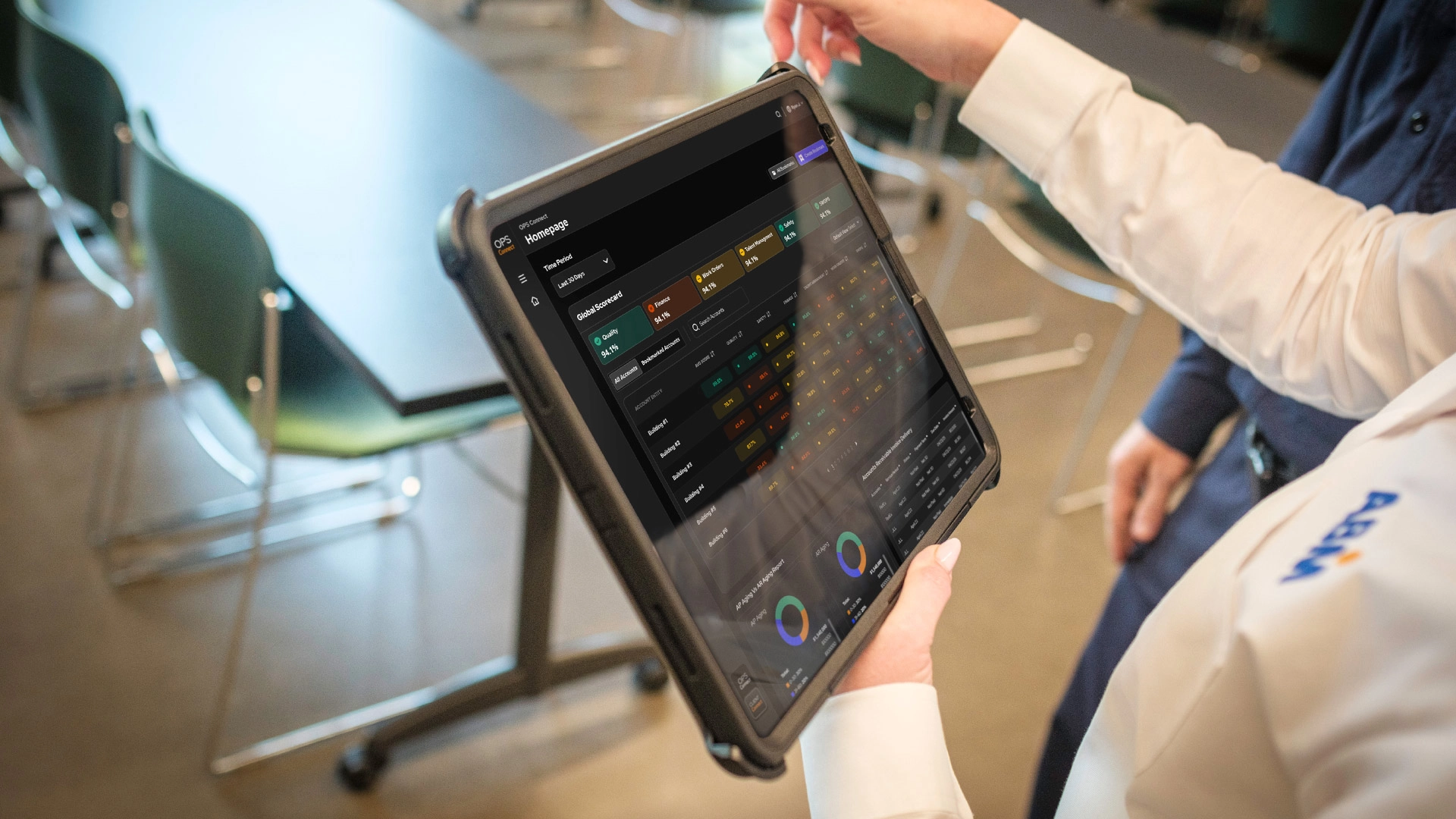
Providers like ABM layer in technology platforms that deliver real-time visibility into service performance, documentation, and outcomes—giving facilities leaders the data they need to demonstrate value and maintain efficiency.
Why co-operative purchasing is transforming higher education procurement
Several forces are driving increased adoption of co-operative purchasing contracts for facility services:
- Rising expectations around sustainability, student experience, and campus visibility
- Limited internal capacity, as facilities leaders balance daily operations with long-term initiatives
- More sophisticated co-op agreements that now support complex, performance-based facility services
- A shift in procurement philosophy, where speed-to-solution is recognized as a strategic advantage
For the facility services that support both day-to-day campus life and long-term goals, co-ops offer a more agile, responsive model.
How to get started with higher education co-operative purchasing
For institutions facing urgent facility needs alongside lengthy procurement timelines, the co-op pathway begins with alignment and timing:
- Confirm existing cooperative purchasing memberships. Contact your procurement and administrative partners.
- Review available co-op service contracts. Focus on providers with experience in higher ed environments.
- Think about your needs. Whether you require a single service or an integrated solutions approach, co-op contracts are designed to be flexible.
- Confirm compliance alignment. While co-op contracts meet competitive standards, institutional policies vary—procurement review ensures alignment.
- Engage before urgency becomes crisis. Familiarity with co-ops creates faster response pathways when timing matters most.
Co-ops don’t eliminate due diligence. They redirect it—away from administrative burden and toward execution.
For higher education institutions ready to improve campuses without the RFP delay, that pathway already exists.