What ABM's safety culture means for your facility


Key Takeaways
- Training has overtaken safety as the top staffing concern in facility management, cited by 35% of professionals in 2025.
- ABM recorded 721,255 real-time safety interactions in 2025, catching and correcting unsafe behavior on client sites before incidents occur.
- ABM's first enterprise-wide safety training program reached a 98.5% completion rate in its first year.
Transcript
Across the first three articles in this series, we've looked at governance, vendor data, and infrastructure, the parts of a sustainability program that translate easily into reportable outcomes. This article looks at something less visible in most disclosures, but arguably more immediate: your workforce.
Workforce development plays a crucial, if underappreciated, role in environmental stewardship and responsible business practices. Every environmental and governance commitment covered so far in this series depends on frontline execution. A facility partner can have the most sophisticated emissions reporting and the most advanced electrification roadmap in the industry. None of it matters if the on-site technician isn't trained to do the job safely and well.
Training has become the top staffing concern
For the first time in five years, training has overtaken safety as the top staffing concern among facility management professionals. A survey found that 35% of respondents named employee training as their leading concern, up from 29% in 2024 and 23% in 2023.
That shift is happening against a backdrop of real workforce strain. IFMA projects that roughly 40% of facility managers will retire by 2026, creating a deficit of skilled roles that new training pipelines have struggled to match.
Skilled trade shortages are exacerbating the problem. One analysis of 12 types of trade job categories, including maintenance technicians, welders, and carpenters, projected an estimated 20 open positions for every one net new worker between 2022 and 2032.
With the skilled labor market this tight, a training program is one of the clearest signs that the technicians, cleaners, and engineers on a client's site are equipped to do the job safely and well.
Most facility service partners have training programs. But what matters is whether that training actually holds up. Does it start before someone's first shift, not during it? Is safety behavior actively observed and corrected in real time, rather than assumed? And does leadership actually track how the workforce is performing, or just assume it's fine?
What separates a training program from a training culture
Four elements tend to separate organizations that take training seriously from those that treat it as a box to be ticked. ABM's programs show how these elements come together in a culture that fully embraces employee training.
Setting team members up for success from the start
First, new hires know what the job actually involves before they accept it, not after. Realistic Job Preview videos and a structured interview process set accurate expectations before someone accepts a frontline role. Realistic Job Previews better align candidate expectations with frontline position requirements, ensuring everyone who applies understands the responsibilities of each position.
A safety-first mindset
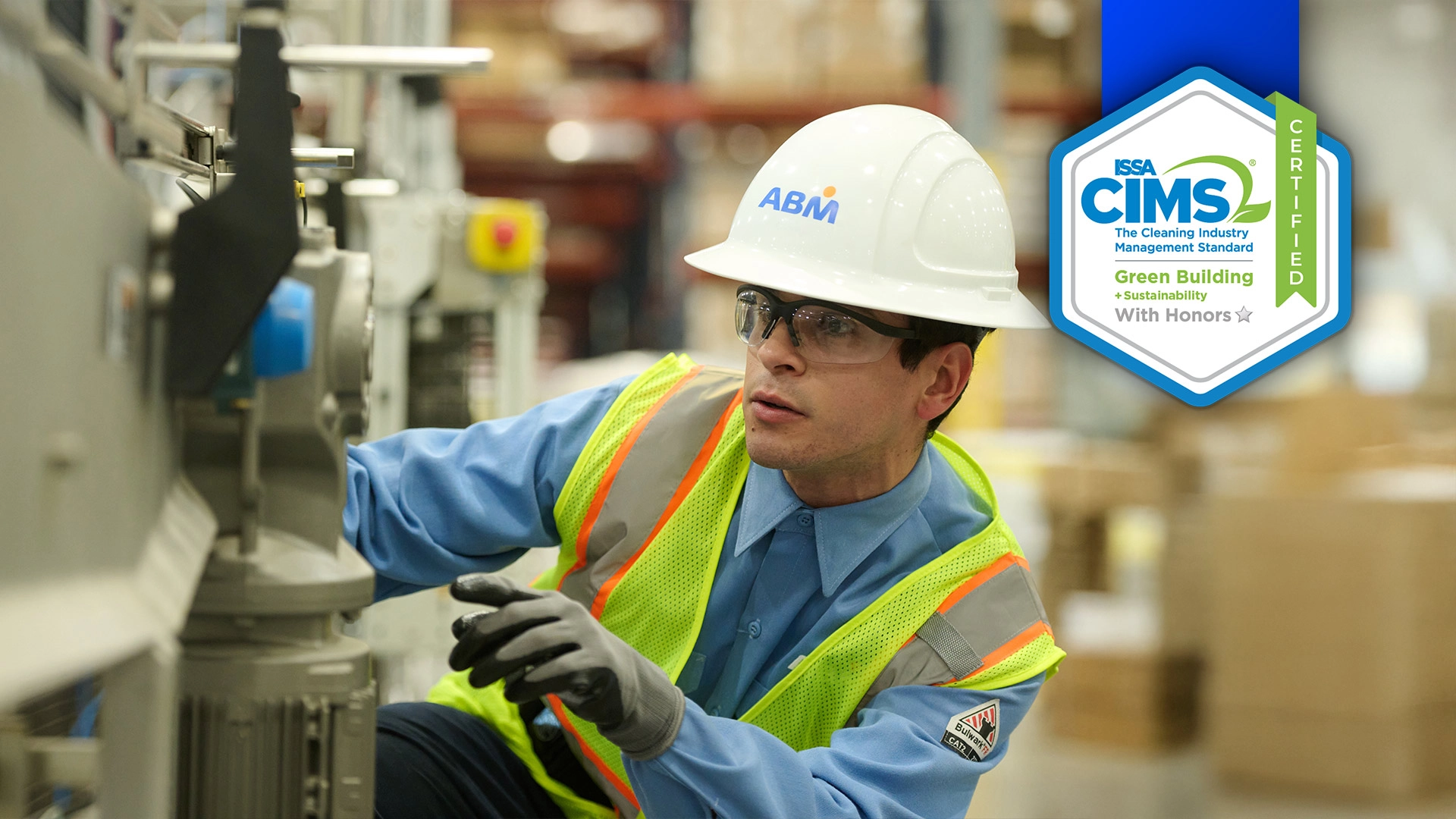
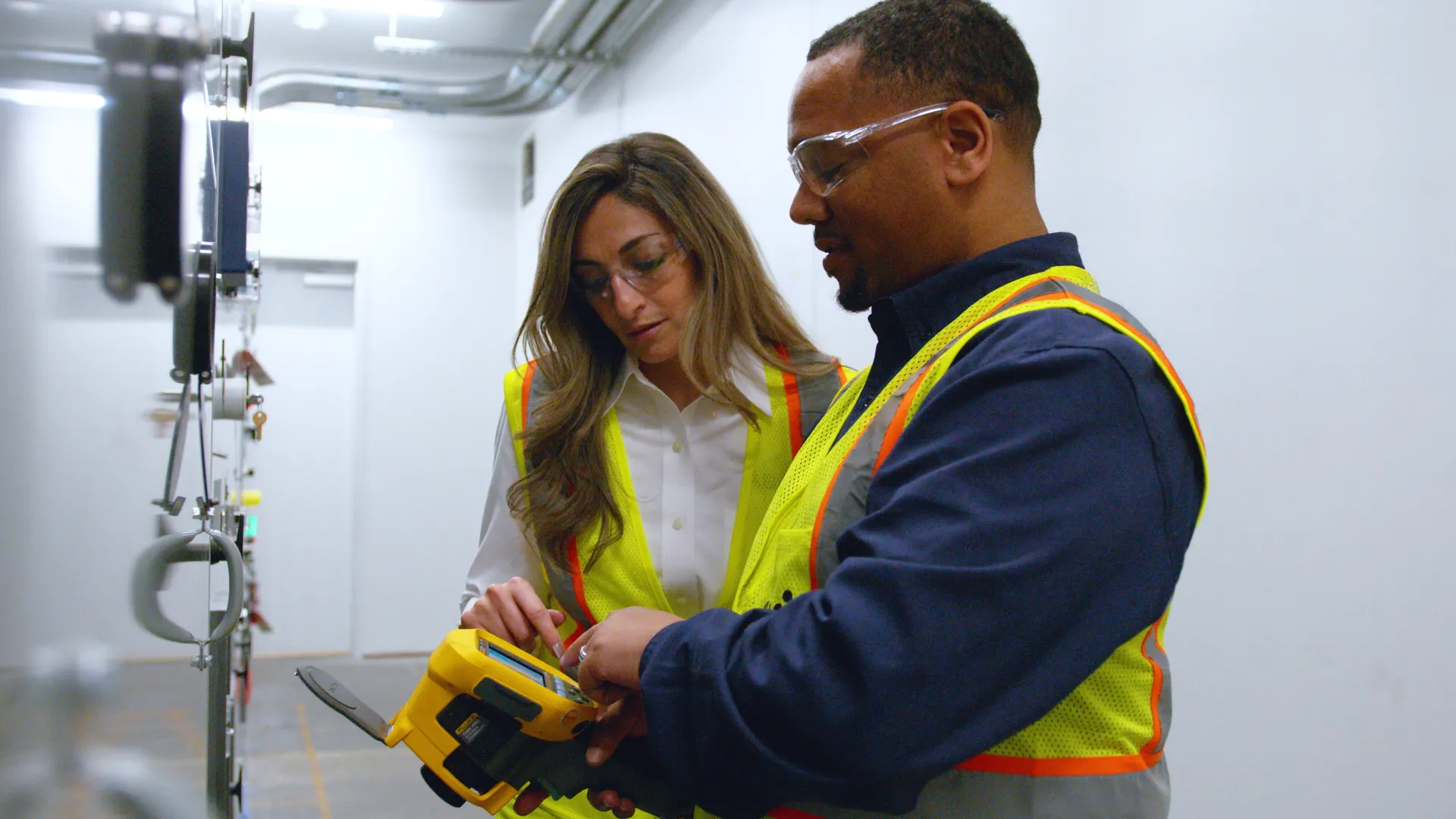
Safety is one of the primary focuses of new-hire training. Safety training happens on day one, not whenever there's time for it. At ABM, new-hire safety training is mandatory within the first five days on the job, part of a broader ThinkSafe culture that treats safety as a daily habit rather than a periodic requirement. In 2025, ABM launched its first enterprise-wide safety training program for all staff and management, reaching a 98.5% completion rate in its first year.
Safety behavior gets observed and corrected in real time, on-site, instead of relying on incident reports after the fact. What began as ABM's Safe Work Observation Program transitioned into a broader Risk Management Information System in 2025, recording 721,255 individual safety interactions that year: real-time conversations between frontline leaders and team members that recognize safe behavior and correct unsafe behavior as it happens.
Career progression for team member retention
Training must go beyond safety for better client outcomes and employee retention. At ABM, team members have access to personal and professional development beyond required learning paths. In 2025, team members were assigned an average of 4.7 hours of mandatory and non-mandatory training. Frontline team members were assigned an average of 2.6 training hours, while staff and management were assigned an average of 13.7 training hours.
Three key development programs help upskill workers at ABM:
- ABM University: Offers a wide range of on-demand training courses, reference materials, and development tools tailored to job level and role-specific needs.
- Fall into Learning: In 2025, ABM launched Fall Into Learning, a focused learning campaign designed to strengthen workforce capability and expand access to career-aligned development opportunities. The initiative provides team members with structured learning experiences centered on emerging technology, industry-recognized certification preparation, operational knowledge, and progressive leadership development.
- Success Behaviors Program: This internal framework outlines key behaviors and actions to support individual performance, our mission, and service standards. By focusing on behavioral alignment, this training aims to enhance both individual performance and team cohesion.
Training and development opportunities are designed for team members at every stage of their career.
Developing future leaders
Finally, frontline supervisors get real leadership development. The quality of on-site supervision matters as much as any one technician's individual training.
In 2025, we launched several new initiatives to further expand leadership development opportunities, align our talent priorities with our growth strategy, and strengthen our leadership pipeline.
- Leadership Foundations: This program supports emerging leaders across the organization and equips future people leaders with the tools they need to succeed. We received 116 enrollments in 2025.
- Frontline Leaders Essentials Program: Our frontline leaders receive additional instructor-led training and virtual resources focused on strengthening management and coaching skills to deliver services safely and efficiently. In 2025, 524 frontline leaders completed the program.
- Leadership Learning Journeys: This online development series breaks down journeys by job level, ranging from individual contributors to emerging leaders and leaders. Topics are curated to address specific needs at each level.
Early-career investment follows the same logic. ABM expanded its internship program by 87% in 2025, and the results suggest the structure is working, not just existing: a 98% satisfaction score among interns, 87% among their managers, and 96% of interns recommended for full-time roles.
What this means for clients
Training and development can easily read as an internal culture story rather than something that affects the service a client actually receives. But dedicated training resources have measurable impact at client sites.
A technician trained through a structured, role-specific curriculum, whose safety behavior is actively observed and corrected in real time, who was accurately briefed on the job before accepting it, shows up differently than one who wasn't.
A high volume of real-time safety observations in a given year isn't primarily a culture metric. It reflects many moments when a safety issue was caught and corrected on a client's site before it became an incident.
A high completion rate on enterprise-wide safety training isn't primarily a compliance statistic either. It answers the question a client is actually asking when evaluating a facility partner: will the person who shows up be equipped to do this safely?
That's also why frontline leadership matters as much as individual technical skill. Investment in frontline supervisor development exists because the quality of on-site supervision, not just any one technician's training, is what determines whether standards hold consistently across a shift, a site, and a portfolio.
The takeaway for evaluating a facility partner
Governance structures, emissions data, and electrification roadmaps are easier to put in a proposal than a training program. But for the person actually walking a client's floors, servicing their equipment, and representing the partnership day to day, training is the variable that determines whether everything else in that proposal holds up in practice.
Given how much the industry itself now identifies training as its top staffing concern, the more useful question for a client to ask a prospective partner isn't whether they have a training program. It's how that program is structured, how consistently it's completed, and whether the organization actively observes and corrects frontline safety behavior, or simply assumes it.
Looking forward to our 2026 report, a few priorities emerge. ABM is working toward ISO 45001 certification in the US, building on the foundation already in place to extend those safety practices from corporate office-based functions out to operational teams. Fleet safety technology, telematics, and AI-enabled dash cameras that give drivers real-time feedback and help coach out risky behavior expanded from an initial rollout in California and Texas to five more states in 2025, with plans to reach additional vehicles nationwide. There’s much more to come as ABM continues its commitment to ESG.
Explore more about ABM’s sustainability work at ABM.com/Perspectives.
Source 1: APnews.com Article
Source 2: CMMonline.com News