2026 Trend Report: The Pacific Northwest
.svg)
.svg)
Transcript
We’re here for the Pacific Northwest
The Pacific Northwest is entering a pivotal phase of growth. Looking ahead to 2026, our team sees the region solidifying its role as a national center for data-driven, energy-intensive, and tech-enabled industries.
With accelerating investment in data centers, Class A commercial real estate, advanced manufacturing, and large-scale campuses, facility leaders face a future defined by rising operational complexity. However, this all comes with significant opportunities. Growth is increasingly shaped by access to reliable power, resilient infrastructure, and specialized talent.
The next chapter will be defined by how effectively facilities respond to surging energy demand, grid constraints, evolving sustainability expectations, and a tightening labor market. All while meeting the uptime, safety, and performance standards of mission-critical operations.
ABM’s work across Seattle, Portland, and the broader Pacific Northwest gives our teams a unique vantage point into these shifts, helping clients anticipate change and build resilient, future-ready operations.
Across the region, thousands of ABM team members support data centers, advanced manufacturing and distribution facilities, universities, healthcare systems, and commercial properties.
From power resilience and demand-based staffing to tech-enabled maintenance and operational intelligence, ABM delivers the expertise, workforce depth, and data visibility leaders need to make confident, real-time decisions.
This report, informed by ABM experts across the Pacific Northwest, outlines the trends we believe will define the next chapter of facility performance in the region.

Scott Salmirs
President & CEO, ABM Industries

Preparing PNW facilities for now and what’s next
Reliability, power resilience, and the talent roster to match
The Pacific Northwest is at an important turning point, and we’re noticing the changes unfold on a daily basis. Growth remains strong across the region, but the demands placed on facilities are intensifying. Power availability, labor constraints, and rising performance expectations are no longer isolated challenges. These pressures are reshaping how buildings are planned, staffed, and operated across every major industry.
From Seattle’s hyperscale data center corridors to Portland’s expanding commercial and industrial environments, facilities are expected to deliver more: greater uptime, faster response, and clearer operational accountability. What was once considered best-in-class is now the baseline. Facility strategies must evolve to meet these heightened expectations.
The data center market is accelerating into prime urban and rural areas across Washington and Oregon, driven by AI and cloud demand. At the same time, grid constraints, commissioning rigor, and specialized staffing requirements are narrowing the margin for error. This means facility readiness now directly impacts risk, uptime, and speed to scale.
Commercial real estate is under a spotlight with uneven return-to-office patterns and increased leasing competition. Tenants are consolidating into higher-quality buildings, raising expectations around cleanliness, responsiveness, comfort, and visible service presence. Owners are increasingly shifting toward integrated service models and experience-driven operations to remain competitive.
Manufacturing and distribution are moving into more rural areas, especially along the Columbia River corridor and in areas near Seattle and Portland where power and transportation infrastructure are strong. These sites are bigger, more uptime-sensitive, and under constant pressure to move faster.
Facilities teams are also being asked to do more with less. Old maintenance and staffing playbooks aren’t holding up anymore, so leaders are being more disciplined about preventive maintenance, flex staffing, and clearly defining where facilities responsibility ends and operations begins. As a result, workforce strategy and continuity planning has become a core operational concern, not a secondary one.
What we hear consistently from facility leaders across Seattle, Portland, and the broader Pacific Northwest is the need for partners who simplify complexity. They are managing broader portfolios with greater accountability and need teams that can anticipate challenges, execute with precision, and provide visibility into performance across power, people, and operations.
Our team has identified key areas where that shift is underway and what facility leaders across the Pacific Northwest must prioritize next to remain competitive.
Louie Serrano is a Senior Branch Manager for ABM Industries in the Pacific Northwest. For over a decade, he’s been overseeing operations across the Puget Sound region, supporting clients in data centers, advanced manufacturing, distribution, and commercial real estate.
Oscar Rodriguez is the Portland Branch Manager for ABM, serving clients in the area for over a decade. He has led operations across a range of industries including commercial real estate, manufacturing and distribution, healthcare, and education.
Hannah Ridgway is a Senior Business Development Manager for ABM in the Pacific Northwest. She partners with operations teams to deliver customized janitorial and engineering solutions for Class A and B commercial properties, supporting ABM’s Seattle and Tacoma branches.
About this report
Backed by market data and firsthand client engagement across industries, the ABM Pacific Northwest team has identified the trends shaping the state’s future—equipping organizations to make more informed, strategic decisions for 2026 and beyond.
Our 3,995+ team members in the PNW region are dedicated to providing maintenance to 1,780 facilities, including the University of Oregon, Hudson Pacific Properties, MultiCare, OHSU, U.S. Brancorp Tower (Big Pink), and Portland International Airport.

MEDICAL FACILITIES
200+ medical office buildings and clinics maintained
FACILITIES ENGINEERING
100+ certified engineers on site
DATA CENTERS
20+ data centers serviced and counting
DISTRIBUTION
50+ distribution centers cleaned and maintained
As data centers grow, so does the need for energy
The data center market in the Pacific Northwest continues to accelerate, driven largely by AI workloads and cloud expansion. We’re seeing growth concentrated in “power-advantaged” corridors, where power can be secured, scaled, and supported over the long term.
In the Seattle and eastern Washington markets, hyperscale and cloud-driven builds are leading the way. Meanwhile in Portland, development is pushing into adjacent, lower-density areas.
As demand rises, uptime expectations, commissioning rigor, and compliance requirements are raising the bar on how these facilities are built and operated.
It may seem obvious, but power has become the defining constraint. What used to be treated as an engineering detail is now a business-critical issue. Increased load from data centers, manufacturing, and electrification is pushing utilities, substations, and backup power planning much earlier in the lifecycle, often before a site is fully operational. As a result, we’re seeing significant investment in substations, emergency power systems, battery storage, and microgrid-ready infrastructure across the region.
Uptime remains non-negotiable, but operating models are under pressure. Reliability today depends as much on disciplined operations and response readiness as it does on infrastructure. Well-trained technical staff are becoming real differentiators. Labor constraints are also driving a shift toward integrated service models to improve response time and accountability.
We’re also seeing operators lean more heavily on data to manage risk. Sensor-based monitoring and predictive analytics are helping teams make smarter energy decisions, identify issues earlier, and manage peak loads more effectively. These tools aren’t just about performance, they’re becoming essential for resilience planning and long-term capacity management.
Over the next year, leading data center operators in the Pacific Northwest are focused on a few clear priorities:
Hardening power and resilience strategies through realistic testing of backup systems and clearer definitions of critical versus non-critical loads.
Tightening maintenance standards and change management to support higher uptime and compliance expectations.
Investing in technology, controls, and analytics to support peak-shaving and real-time operational visibility.
Relying more heavily on partners that can provide both technical expertise and the specialized workforce needed to operate at scale.
FOR DECISION MAKERS:
Formalize resilience targets, test backup systems under realistic conditions, and revisit critical loads vs. “nice-to-have” loads. Invest in upgraded controls, predictive analytics for peak-shaving, and always ensure you have an emergency power strategy in place.
Commercial real estate is putting emphasis on tenant satisfaction
Across the Pacific Northwest and majority of the country, we’re seeing companies choose reliability over risk when it comes to commercial real estate. Focus is now on tenant satisfaction, as well as Class A properties.
With inconsistent return-to-office patterns and sustained leasing competition, tenants are consolidating into fewer, higher-quality, amenity-rich buildings. This raises the bar for how properties are operated.
This shift is also changing more than leasing strategies. It is redefining day-to-day expectations. Class A buildings are increasingly judged on experience-driven outcomes: cleanliness, comfort, responsiveness, and visible service.
What once differentiated top-tier properties is now considered table stakes, and operational missteps are more visible in an environment where occupancy hovers around 50 percent or higher.
Workforce execution has also become a key differentiator. As service expectations rise, owners and operators are rethinking front-of-house models, day porter coverage, and response-time accountability. Teams are being asked to deliver consistent experiences across longer hours and more variable occupancy, often with tighter labor availability.
As a result, providers are being evaluated less on tasks completed and more on their ability to staff reliably, adapt quickly, and maintain service continuity.
Overall building reliability is also under greater scrutiny. Tenants expect spaces that feel welcoming, comfortable, and well-managed every day, not just during peak hours.
This has driven increased focus on performance metrics, service visibility, and real-time responsiveness to issues that impact tenant experience. It has also led to an increase in sponsored, tenant-focused events held at properties, like tenant appreciation days, holiday events, and lunch-and-learn sessions.
Looking ahead, owners and facility managers of Class A properties in the Pacific Northwest are prioritizing:
Shifting operational models from task-based delivery to experience-based outcomes.
Strengthening day porter and front-of-house coverage to support visibility and responsiveness.
Improving service metrics and communication to support tenant retention and leasing competitiveness.
FOR DECISION MAKERS:
Shift from “tasks completed” to experience outcomes, tighten day porter/front-of-house models, and improve responsiveness metrics.
Growth redefines where manufacturing and distribution operate
Manufacturing and distribution growth in the Pacific Northwest is increasingly moving beyond the city and into semirural regions near Seattle and Portland.
Expansion along the Columbia River corridor, eastern Washington, and areas like Wilsonville is being driven by proximity to ports, rail, waterways, and reliable power. This is starting to create a new geography of production and logistics across the region.
This growth is also reshaping businesses. Facilities are larger, more complex, and far more uptime-sensitive. Requirements are heightening around safety, reliability, and throughput. Facilities teams are being asked to support continuous operations, faster turnaround times, and expanding footprints, often without a corresponding increase in on-site resources.
Maintenance and workforce models are under their own particular strain. High-throughput environments demand disciplined preventive maintenance for material handling systems, rapid response when issues arise, and the ability to scale staffing through seasonal peaks, turnover, and expansion.
Traditional approaches like static staffing plans and reactive maintenance are breaking down faster, increasing risk and operational friction.
Clarity of responsibility is also becoming critical. As operations move faster, informal work can quickly become expected work, creating gaps in accountability between facilities and operations teams.
Leaders are responding by standardizing safety practices, tightening work order triage, and defining ownership before issues impact uptime or safety.
By strengthening preventive maintenance programs for material handling and critical systems, downtime will decrease, allowing for more work to be completed in other areas.
Building flexible staffing models offers the ability to adapt for volume shifts and labor volatility.
Standardizing safety protocols and clearly defining facilities versus operations responsibilities helps protect uptime and overall facility performance.
FOR DECISION MAKERS:
Tighten preventive maintenance for material handling systems, build flex staffing plans, standardize safety and work order triage. Define what facility management owns vs. what operations owns before informal work becomes expected work.
New workforce solutions become an operational imperative
Workforce availability has moved from a staffing challenge to a core business concern across the Pacific Northwest and beyond. What was once treated as a short-term labor issue is now shaping long-term operational planning and risk management decisions.
With sustained budget pressure across commercial real estate, manufacturing, education, and healthcare, facility leaders are rethinking how they access talent and build bench strength.
Flexibility, speed, and continuity are becoming just as critical as cost control. This is especially true with janitorial, engineering, and technical positions where gaps are most visible and hardest to backfill.
The conversation has also shifted from headcount to total cost of ownership. Leaders are increasingly willing to outsource non-core services when it improves reliability, speed-to-fill, and continuity.
Workforce partners are expected to bring robust training pipelines, scalable labor models, and leadership coverage that reduce operational exposure. This means not only having trained staff to fill roles quickly, but also ensuring teams are cross-trained, certified where necessary, and capable of maintaining service quality.
The switch to scalable models allows organizations to adjust staffing levels in response to seasonal demands, project peaks, or sudden vacancies without compromising continuity.
Facility service providers are being evaluated on not only price, but also their ability to deploy trained teams quickly and sustain performance over time. Staffing gaps don’t stay isolated for long as they show up as safety issues, deferred maintenance, and tenant or occupant complaints.
Decision-making is also taking longer with more stakeholders involved, but commitment is stronger once choices are made.
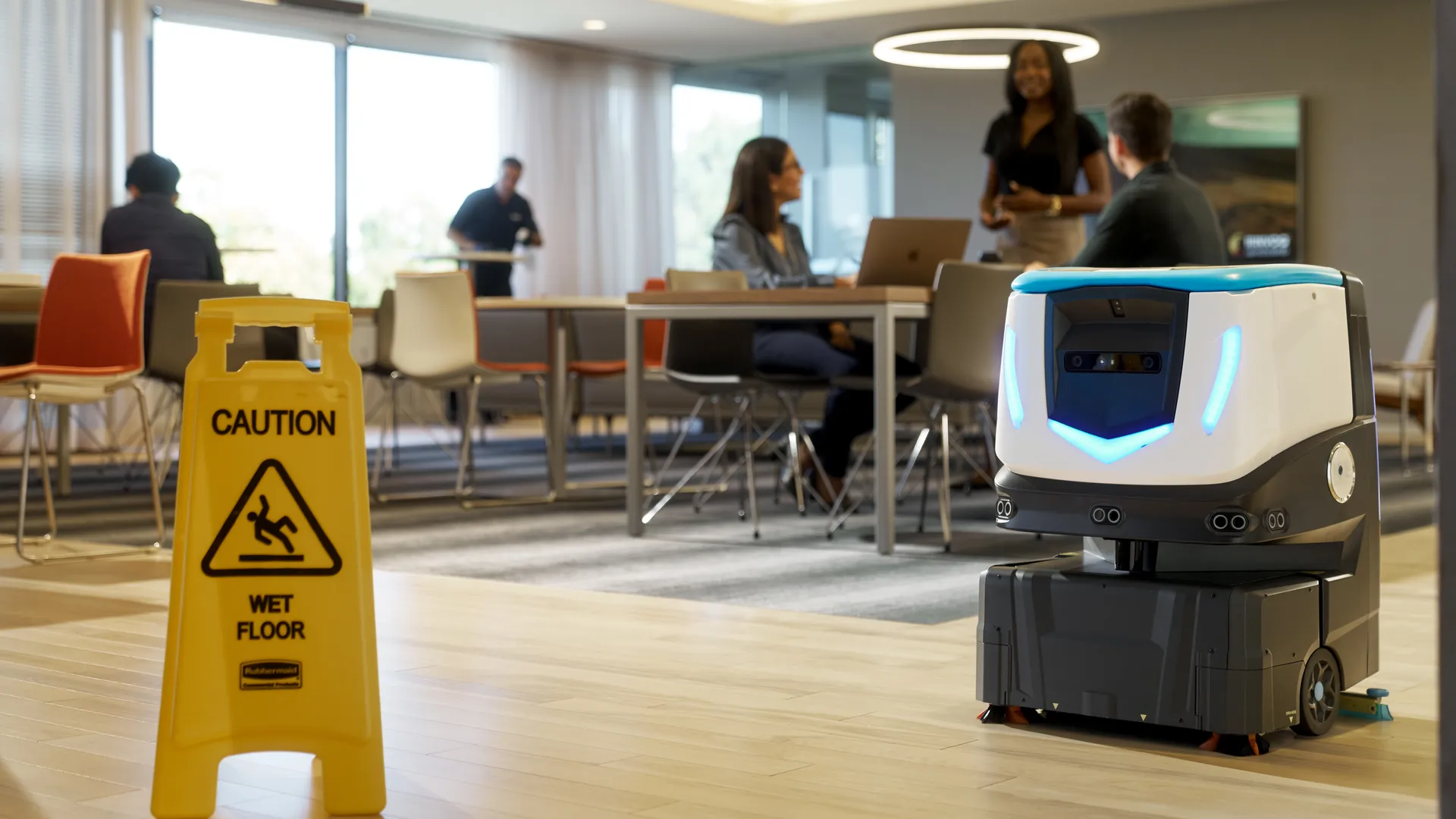
In parallel, automation is playing a larger role. Robotics, smart scheduling, and technology-enabled workflows are helping teams offset labor constraints while maintaining consistency and service standards.
Workforce strategy is no longer just about filling roles, it’s about resilience in day-to-day operations.
FOR DECISION MAKERS:
Develop workforce plans (fill-time, bench strategy, escalation coverage) and continuity planning for key roles. Lean on well-trained staffing partners.
Onsite Insights: Q&A with Louie Serrano
Louie has guided ABM clients in the Seattle/Tacoma area for over 13 years. With a hands-on leadership style and a deep understanding of workforce management, he has scaled operations, improved retention, and exceeded performance KPIs. When he’s not problem-solving, Louie enjoys mentoring future leaders.
What are ABM’s Seattle clients experiencing on a daily basis? Here’s an inside perspective.
Q: What makes Seattle and the surrounding area unique when it comes to staffing?
A: Seattle is one of the toughest markets for technical talent. There’s a lot of demand, so keeping good engineers and skilled staff is a big deal. How fast you can fill a vacancy or backfill a role can actually affect uptime and tenant satisfaction. It’s not just about having people, it’s about having the right people in place at the right time.
Q: How does that type of workforce stability impact mission-critical sites?
A: For facilities like data centers, hospitals, or semiconductor fabs, downtime isn’t just an inconvenience, it can actually cost a lot of money or even create safety issues. Having experienced, consistent staff on site makes all the difference. They know the systems, the quirks of the building, and how to respond quickly when something goes wrong.
Q: What about technology? What role does it play in facility operations?
A: At the end of the day, technology is helping teams stay ahead. Digital dashboards, HVAC monitoring, and alert systems mean staff can catch problems before they become emergencies.
It also helps when a manager can’t be on site every day, they can still see what’s happening and make informed decisions remotely.
Q: How are your facility teams adapting to the growing operational complexities?
A: Teams are moving away from just “checking boxes” to running buildings as a complete experience. That means cross-training staff, doing preventive maintenance, and making sure everyone knows who’s responsible for what.
It’s about keeping buildings running smoothly no matter what’s happening outside of our control.
Q: One last question before we hand it over to Oscar. How would you say Seattle clients benefit from partnering with ABM?
A: Clients love that we bring both expertise and people who can handle complex, mission-critical facilities. They don’t have to worry about whether their building systems will stay online or if someone can respond quickly when there’s a problem.
Having a partner who combines skilled staff, strong processes, and technology really gives them confidence. That type of peace of mind is invaluable in a market as fast-paced as this.
Onsite: Insights: Q&A with Oscar Rodriguez
With over 20 years of facility experience, Oscar has partnered with ABM clients in Portland for over a decade. He earns trust through careful listening, attention to detail and a focus on measurable results. When you meet Oscar, ask about his love of Grand Prix racing.
What challenges and realities are ABM’s Portland clients facing? Here a closer look from a regional leader.
Q: Where is Portland seeing the most facility growth?
A: Most of the growth actually isn’t downtown anymore. It’s moving out to the suburbs and surrounding corridors. Places like Washington County, Clackamas County, and the I-5 corridor are really heating up.
Companies are building data centers, distribution hubs, and manufacturing sites where there’s more space, reliable power, and easier access to transportation.
Q: What challenges do these suburban facilities face compared to downtown buildings?
A: Great question. Suburban sites are often bigger, which means more systems to manage and more staff needed. You can’t just rely on the same old downtown staffing model.
These buildings often host tech or manufacturing operations that can’t afford downtime, so operations have to be tighter and more proactive.
Q: Jumping over to commercial real estate, what are tenant expectations like these days?
A: Tenants care about more than just the building. They want everything to work smoothly every day. They notice when lights are out, elevators are slow, or common areas aren’t clean.
Buildings that can provide consistent service, flexibility, and even some personal touches like events or well-maintained shared spaces, really stand out.
Q: What’s the key factor in building trust with Portland clients?
A: Relationships matter most. If there’s anything I learned from the last several years of working in this area, it’s that people want to work with teams they know will show up, understand their building, and handle problems quickly. Local presence, reliability, and just plain knowing your client’s needs go a long way here.
Q: And lastly, what would you say Portland clients value most when working with ABM?
A: Clients here really appreciate that we show up and understand their buildings. It’s not just about doing the work, it’s about making their operations run smoothly and anticipating issues before they happen.
They notice when we’re proactive, communicate clearly, and provide solutions that actually make their day easier. Being local and responsive is a big deal when it comes to building trust.
ABM Facility Solutions
Set new standards in cleanliness, comfort, and operational efficiency for your facility. Our team helps you earn trust with everyone who walks through your doors—treating your facility as if it were our own.
- Cleaning Services
- Construction Clean Services
- Support Services
- Parking Services
- Facilities Engineering
ABM Operations & Maintenance
Get expert upkeep and support tailored to your facility’s unique needs. Our team not only keeps your systems running smoothly, but also helps enhance comfort for your occupants and uncovers new efficiencies that add lasting value.
- Mission Critical Solutions
- Electrification
Staffing facilities in one of the country’s tightest labor markets
For Seattle, facilities performance increasingly hinges on one thing: having the right people in place—and keeping them there. Vacancy time, backfill speed, and bench strength now directly affect uptime, tenant experience, and compliance.
Across much of the market, demand for skilled building engineers and technical facilities staff has outpaced the talent pipeline. Class A offices, life science environments, and power-intensive facilities all require specialized experience, yet competition for that talent is constant. Engineers here have options, and facilities leaders feel that reality every time a position opens—or doesn’t get filled.
“Many engineers don’t initially recognize the depth or complexity of the work being done across the city’s buildings,” says John Handley, Engineering Manager for ABM in the region. “Once they do, expectations shift. Retention, support, and clear career paths become just as important as wages.” Handley also noted that in more than one recent transition, keeping experienced engineers in place was a primary driver behind a
change in providers.
For area hospitals, data centers, and semiconductor fabs, staffing gaps are more than a scheduling problem. Uptime depends as much on experienced people as it does on systems. As Peter Darby, ABM’s lead on electrical power in the West, puts it, “In power-critical environments, downtime isn’t an inconvenience—it has real operational consequences.”
What differentiates Seattle facilities isn’t simply access to talent—it’s the ability to absorb change without disruption. Leaders are looking for partners who understand the local labor reality, invest in engineering teams, and can mobilize support when conditions shift.
In a market where the margin for error is thin, workforce continuity has become one of the most decisive factors in facilities performance.
By the Numbers
- Highly competitive market for building engineers and technical talent
- ~90+ million square feet of office space across the Seattle metro area
- Top-10 U.S. market for data center inventory and expansion
- Majority-hydropowered electric grid, shaping reliability expectations
- Thousands of large buildings entering mandatory energy and emissions reporting cycles by 2026
Finding momentum beyond downtown
Portland’s facilities represent a study in contrast: As downtown works through the lingering low occupancy and distressed assets, the surrounding areas have real energy again: more leasing, more activity, and more demand for steady, high-performing operations.
The next phase of Portland’s facilities story is taking shape beyond downtown—and bringing new expectations with it.
From Washington County and Clackamas County to the I-5 corridor and across the river into Vancouver, facility footprints are expanding along with the need for reliable day-to-day operations. Data centers, distribution hubs, advanced manufacturing, and suburban office parks are absorbing activity that once concentrated downtown. West of the city, Portland’s “Silicon Forest” continues to attract critical environments that value space, power access, and stability over visibility.
Alexandra Dooley, Senior Business Development Manager in Portland, describes the market as intensely relationship-driven and often cautious. “People here want to know who they’re working with,” she noted. “They care about local presence, trust, and whether you actually understand their building, not just the contract.”
As a result, solutions are becoming more flexible. Owners are asking for alternative pricing structures. Managers are seeking partners who can scale up or down without sacrificing service. In many buildings, tenant experience has become a strategic lever, with common areas repurposed, events hosted, and day-to-day service becoming more visible and more personal.
The next phase of Portland’s facilities story is taking shape beyond downtown. Suburban office parks, manufacturing sites, distribution centers, and critical environments are driving real demand—and bringing new expectations with them.
By the Numbers
- ~40–45 million square feet of office space across the metro area
- Top 20 U.S. data center market by inventory, with continued expansion in Hillsboro/Washington County
- Washington County (“Silicon Forest”) hosts one of the largest concentrations of semiconductor and advanced manufacturing facilities in the region
- Central Business District office vacancy exceeding 25–30% (varies by submarket and quarter)
Modernizing mission-critical facilities in aerospace manufacturing
A leading global aerospace manufacturer in the Pacific Northwest required a modernized facility strategy to align with the precision and visibility of world-class production.
Challenge
After decades without comprehensive specialty cleaning, their high-bay environments and shop floors no longer reflected modern aerospace standards. Facing heightened regulatory oversight and financial pressures, the client needed to modernize over 5 million square feet of mission-critical space without disrupting complex union guidelines.
Solution
ABM stepped in with a high-impact, integrated solution designed to restore pride and production readiness:
- Specialty Cleaning: Restoring manufacturing and shop floor standards through high-bay cleaning up to 105 feet.
- Operational Consulting: Conducting thousands of structured audits to benchmark workflows and develop data-backed improvement playbooks.
- Infrastructure Analysis: Utilizing campus-wide aerial thermography to identify energy loss, moisture intrusion, and structural risks.
- Janitorial & Support Services: Providing quarterly custodial programs and move, add, change (MAC) support for vendor operations.
Benefit
The results were transformative, successfully repositioning the facility to reflect modern standards. Enhanced workplace conditions boosted employee morale, and proactive infrastructure assessments reduced operational risk. Data-driven insights from thousands of audits allowed the client to prioritize maintenance and capital investments effectively.
The success of this partnership has since led to an expanded partnership across additional facilities, reinforcing ABM’s role in supporting mission-critical aerospace manufacturing at a massive scale.

%20(1).webp)