Beyond routine maintenance: Commercial Property Readiness Playbook


Transcript
SPECIALTY SERVICES
A practical guide for protecting property value, supporting occupants, preparing for what’s next, and recovering from the unexpected.
Why CRE readiness matters
Facility leaders are constantly managing moments that extend beyond routine maintenance: recovering from a storm, preparing for a surprise tenant walkthrough, supporting a seasonal event, or responding to unplanned construction. These moments may not happen every day, but how you handle them affects facility performance, tenant experience, and your ability to recover quickly. Facility readiness means being prepared to keep your space safe, functional, presentable, and compliant when needs extend beyond everyday maintenance.
To inform this guide, we spoke with Bryan Engler, Vice President of Operations, Great Lakes Region, about the specialty service needs facility leaders encounter and the value of planning ahead. Drawing on his insights and ABM’s Specialty Services’ expertise, this playbook focuses on four priorities:
- PROTECTING PROPERTY VALUE
- SUPPORTING TENANTS AND OCCUPANTS
- STAYING SEASONALLY READY
- RECOVERING FASTER WHEN THE UNEXPECTED HAPPENS
Use the readiness questions in each section to identify potential gaps and determine where your property may need additional support.
SECTION 1
Protect property value
The Situation
Every surface in a commercial property is aging, whether you notice it or not. Floors dull. Grout darkens. Natural stone shows etching. Carpets collect debris that may not be visible. Exterior surfaces absorb the effects of weather, traffic, and seasonal contaminants.
Left unaddressed, these small issues can become deferred maintenance—a business risk with a much larger price tag. Deferred maintenance costs are estimated to compound by roughly 7% each year, while repair and maintenance already account for a significant share of facility operating expenses. The longer a need is postponed, the more likely it is to become a larger restoration or replacement project.
The Stakes
Specialty Services are part of asset preservation, not simply cosmetic upkeep. Regular attention can extend the useful life of flooring, stone, metal, parking areas, and other high-value surfaces.
“By having regular service, you identify issues and provide a much longer lifespan to your facility, whether it’s the metal on your elevators, the stone in your lobby, or the parking lot exposed to winter salt, humidity, mold, or algae,” says Engler.
The wrong approach, however, can create additional damage. Natural stone, coated floors and other specialty surfaces require the right chemicals, equipment and techniques. As Engler explains:
“If the team responsible doesn’t have the proper training, they can do a lot more damage than good through the incorrect application of a chemical or the wrong machine.”
For commercial property leaders, the question is not only whether a surface looks worn. It is whether the right care is being provided before restoration becomes replacement.
Addressing aging facility needs as they arise offers significant financial advantages. One organization that put a preventive maintenance program in place lowered the total cost of ownership of its carpets by 22%.
Readiness Assessment
- When was your flooring—carpet, tile, stone or hard surface—last professionally restored, not just cleaned?
- Which surfaces require specialized chemicals, equipment or technicians?
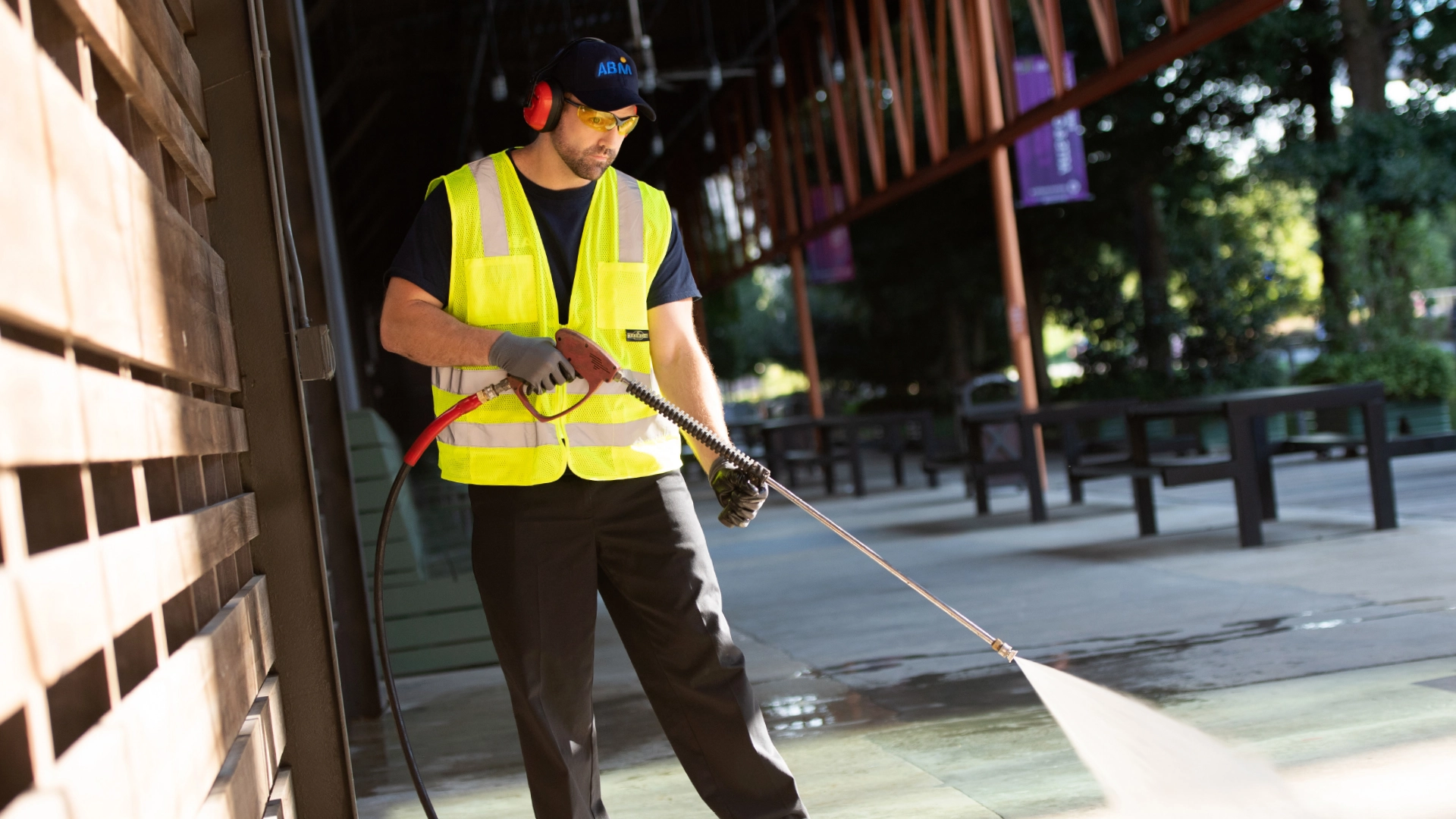
- Does your pressure-washing schedule account for local climate and seasonal contaminants?
- Have you identified which surfaces are nearing the point where restoration is more cost-effective than replacement?
SECTION 2
Support tenants and occupants
The Situation
For commercial properties, the physical environment is part of the tenant experience. Lobbies, restrooms, elevators, parking areas, and shared spaces communicate something about the property before a tenant or visitor ever speaks with the management team.
A property may be technically functional and still feel neglected. Worn flooring, stained surfaces, damaged furniture, unclear parking markings or poorly maintained landscaping can influence how people experience the building—and how confident tenants feel in the property team’s ability to maintain it.
The Stakes
Tenant expectations extend beyond basic cleanliness. People notice whether common areas are welcoming, whether high-traffic spaces are cared for, and whether the property feels ready for the people who use it every day.
That makes Specialty Services an important part of maintaining the property’s overall experience. Floor restoration, upholstery cleaning, window treatments, pressure washing, and other project-based services can address the details that routine maintenance alone may not cover.
The goal is not perfection for its own sake. It is a property that consistently reflects the standards tenants expect—standards proven to increase space utilization, employee satisfaction, and retention—and supports the experience owners and operators are working to create.
Readiness Assessment
- Would a visitor’s first impression of your lobby, entrance and parking area reflect well on the property today?
- When were your high-traffic common areas last professionally cleaned or restored?
- Are upholstery, window treatments, shared furniture or other visible surfaces showing wear?
- Which areas generate the most tenant complaints or service requests?
- Is the condition of the property supporting tenant expectations—or creating avoidable friction?
SECTION 3
Stay seasonally ready
The Situation
Some property needs fall between regularly scheduled maintenance and emergency response. They are predictable, but because they do not happen every day, they can easily fall off the calendar.
Seasonal transitions, tenant move-ins, inspections, executive visits, major events and compliance-linked services all require preparation. When they are not planned in advance, facility teams may find themselves searching for a provider, coordinating multiple vendors or trying to complete work under unnecessary time pressure.
The Stakes
Readiness is a planning discipline. The properties that handle these moments well are not necessarily responding faster because they have fewer demands. They are responding faster because they have anticipated those demands.
“It’s really about being proactive versus reactive,” Engler says.
Planning two to three months ahead can give teams time to schedule disinfection before flu season, prepare exterior surfaces before spring events, coordinate project cleaning around tenant activity, or address a facility need before an important visit.
Proactive scheduling also reduces administrative burden. “Scheduling specialty work in advance can reduce the time and disruption that come with finding a provider under pressure.”
When specialty work is already planned, facility leaders are not scrambling to find, vet, and book a provider when the need becomes urgent.
Readiness Assessment
- Have you mapped the events and conditions that could affect the property in the next 60–90 days?
- Are seasonal services scheduled in advance or requested only when the need becomes urgent?
- Are tenant move-ins, inspections, executive visits and major events connected to a facility-readiness plan?
- Are compliance-linked services, such as kitchen hood cleaning, tracked on a defined schedule?
- If an executive visit or tenant walkthrough were scheduled tomorrow, would the property be ready?
SECTION 4
Recover faster
The Situation
Storms don’t call ahead. Neither does a burst pipe, a construction mishap, or a power outage that knocks out more than the lights. For commercial property owners and facility leaders, an unexpected event can quickly affect tenants, visitors, employees and daily operations.
When something unexpected happens, the question isn’t whether you’ll need support—it’s how fast you can get it and get back to normal operations.
The Stakes
In commercial real estate, recovery is about more than addressing immediate damage. Debris, snow, standing water, damaged surfaces and unkempt landscaping can affect access, appearance, safety, and tenant confidence. The longer common areas, entrances, or exterior spaces remain disrupted, the greater the impact on operations and the tenant experience.
Specialty Services can support recovery needs ranging from debris and snow removal to landscape cleanup, pressure washing and other exterior cleaning. Recovery may continue long after the immediate incident is over, as teams work to restore shared spaces and return the property to its normal condition.
Facilities that already know who to call can respond faster than those searching for support in the middle of a crisis. A provider with local teams and broad capabilities can adjust schedules, coordinate crews, and help address multiple needs at once—something a remote or single-service vendor may struggle to do.
Readiness Assessment
- Do you know who to call if severe weather or an emergency affects the property tonight?
- Have you identified the areas that would need immediate attention after an incident?
- Is your team clear on the difference between immediate response and the recovery work that follows?
- Have you reviewed your emergency plan since the last real event?
- Are emergency contacts, service expectations and escalation paths documented and accessible?
One partner for more of your property’s needs
Specialty Services are often treated as an afterthought—something to address only when a problem becomes visible or urgent. But postponing this work does not eliminate the cost. It can allow minor wear, damage, or seasonal needs to become larger operational and financial challenges.
Bringing Specialty Services under the same provider as routine facility services makes it easier to plan ahead, respond quickly, and maintain a consistent standard across the property.
“The advantage of somebody like us is that we’re already there. Your point of contact doesn’t change. Your escalation path doesn’t change,” Engler says. “We recognize and see things that a lot of people won’t.”
That continuity can make a meaningful difference. Your existing team understands the property, recognizes emerging needs, and can help coordinate additional services without creating an entirely new vendor relationship.
With ABM, commercial real estate leaders gain:
More time, less onboarding
Your ABM team already understands your facility and can coordinate Specialty Services through an existing relationship.
One point of contact
A single call to your ABM representative gets the process started.
Eyes on your space every day
Your on-site team can identify emerging issues and recommend action before small problems become big ones.
Flexible scheduling
A local team with a broad presence in your market can adjust to your schedule and respond quickly as needs change.
Consistent standards
ABM-hired and ABM-trained teams bring established processes and familiarity with your facility.
National strength
If a need falls outside a local team’scapabilities, ABM can help identify qualified providers or review outside proposals to help clients make informed decisions.
Ready to see where your property stands?
Your ABM representative can help you act on the priorities in this playbook, whether you need support for a single project or want to build a more proactive Specialty Services plan.
Visit ABM.com/specialty or call 866.624.1520 to learn more.