Driving frontline adoption of operational technology

.svg)
Transcript
Technology is only as effective as the people who use it.
Despite billions invested in digital transformation, initiatives often fail to meet their goals, typically due to poor adoption, not poor technology.
In facility operations, where large, inclusive frontline teams execute the majority of daily work, this gap is even more pronounced. Frontline workers make up a significant portion of the global workforce, yet many lack the tools, training, or support needed to fully adopt new systems.
That’s why successful technology adoption must go beyond deployment to include workforce transformation.
The reality of frontline adoption
Frontline teams often include:
- Long-tenured employees accustomed to established workflows
- Multilingual workforces with varying communication needs
- Staff with limited exposure to mobile technology in their roles
Initial resistance is common and expected.
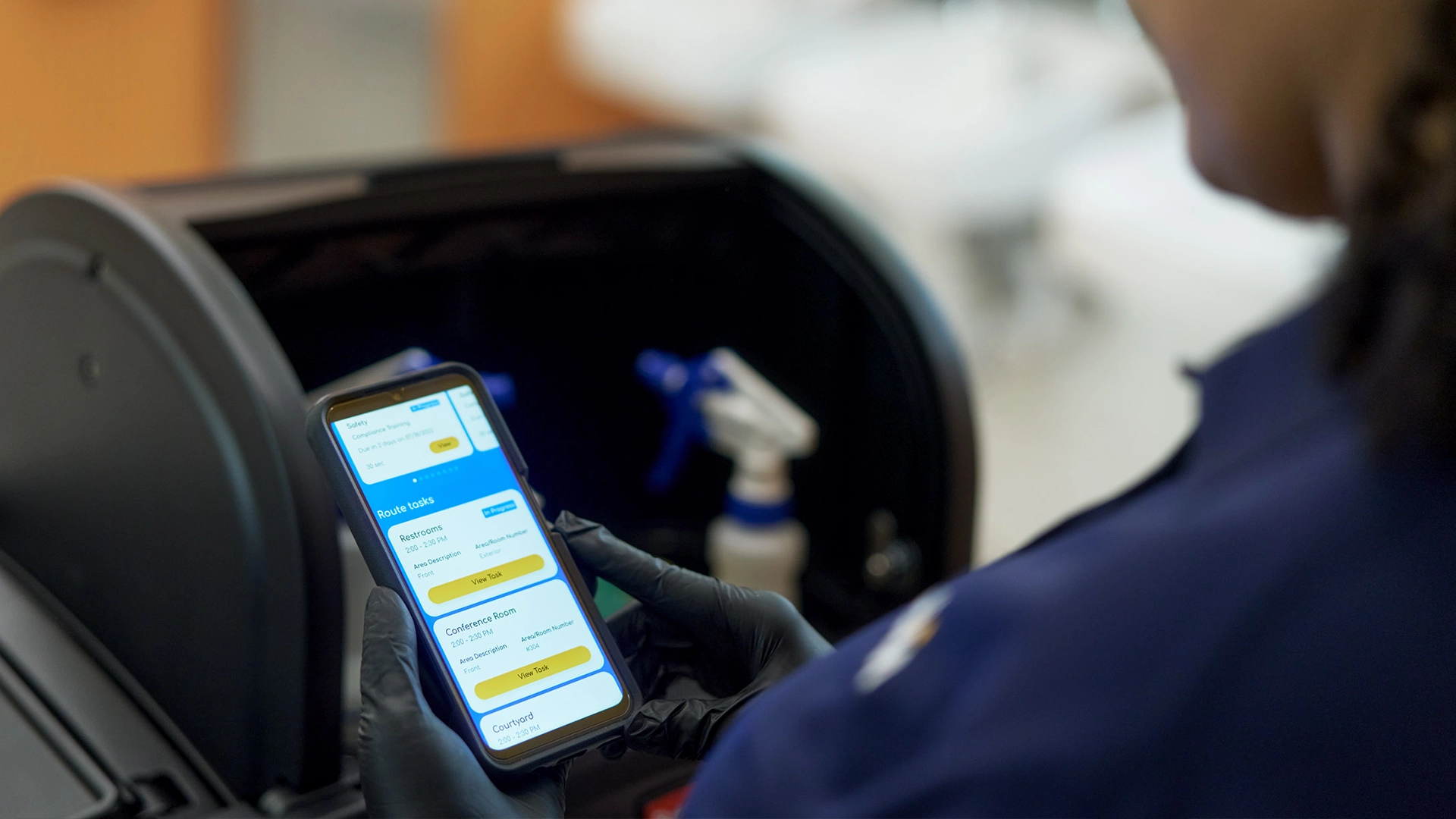
At one multi-building complex in New York City, many team members were unfamiliar with digital task tracking and hesitant to adopt QR-based scanning as part of their daily routines. Without the right approach, this resistance can stall or undermine even the most advanced solutions.
Leading adoption through enablement
ABM approached adoption as an operational priority, not an afterthought.
A dedicated onsite supervisor played a central role in:
- Training frontline managers and employees
- Supporting the transition of incumbent staff into new workflows
- Monitoring usage and reinforcing expectations
- Providing real-time coaching based on performance data
This hands-on leadership created accountability while ensuring employees were supported through the transition.
Designing for an inclusive workforce
Technology adoption at scale requires accessibility.
The platform’s multilingual capabilities enabled broader engagement across a diverse workforce, allowing employees to interact with the system in their preferred language. This reduced friction, improved comprehension, and accelerated onboarding.
Just as importantly, the system was designed to be intuitive, integrating into daily routines rather than disrupting them.
Turning compliance into value
As training builds familiarity and compliance establishes consistency, the real shift happens when employees begin to see the technology not as a requirement, but as a tool that helps them do their jobs more effectively.
At this campus, frontline teams began to see the value of real-time task validation:
- Providing clear proof of completed work
- Reducing ambiguity and unnecessary questioning
- Creating a documented record of performance
What initially felt like additional effort became a tool for protection, clarity, and recognition.
Sustaining adoption through visibility
Ongoing adoption is reinforced through transparency.
With access to dashboards and performance data:
- Managers can identify gaps and address them quickly
- Teams gain visibility into expectations and outcomes
- Cross-shift coordination improves through shared information
This creates a feedback loop where data informs behavior, and behavior improves performance.
The outcome: a more capable, connected workforce
As adoption matured:
- Scan compliance increased significantly
- Service delivery became more consistent and verifiable
- Teams operated with greater alignment across shifts and buildings
Beyond performance metrics, the workforce itself evolved to become more engaged, more accountable, and better equipped to deliver in a high-expectation environment.
Explore how this NYC tech giant enabled proactive operations with real-time visibility.
Technology adoption as a leadership discipline
Successful implementation of operational technology requires more than tools. It requires:
- Structured onboarding and training
- Onsite leadership and reinforcement
- Systems designed for workforce realities
- A clear connection between technology and daily value
Leadership, enablement, and frontline engagement are key to successful adoption. Organizations that recognize this, and invest accordingly, are better positioned to unlock the full potential of their frontline teams.
In this case, that approach turned a complex deployment into a sustainable operational advantage.
Learn how ABM empowers teams with operational technology to improve facility outcomes with ABM ConnectTM.







%20(1).webp)

.webp)