What CIMS really measures: A conversation with ABM experts

.svg)
Key Takeaways
- Operationalized sustainability: Sustainability is now table stakes, judged by measurable outcomes rather than stated environmental commitments.
- Operational consistency: Standards align practices across complex organizations, turning sustainability strategy into documented, repeatable day-to-day execution.
- Third-party verification: Clients increasingly want proof. Certifications like ISSA’s CIMS GB+ Sustainability, and this year's independently verified greenhouse gas inventory, validate claims rather than simply stating them.
Transcript
As sustainability expectations continue to evolve, facility leaders face growing pressure to demonstrate measurable results rather than simply establish goals.
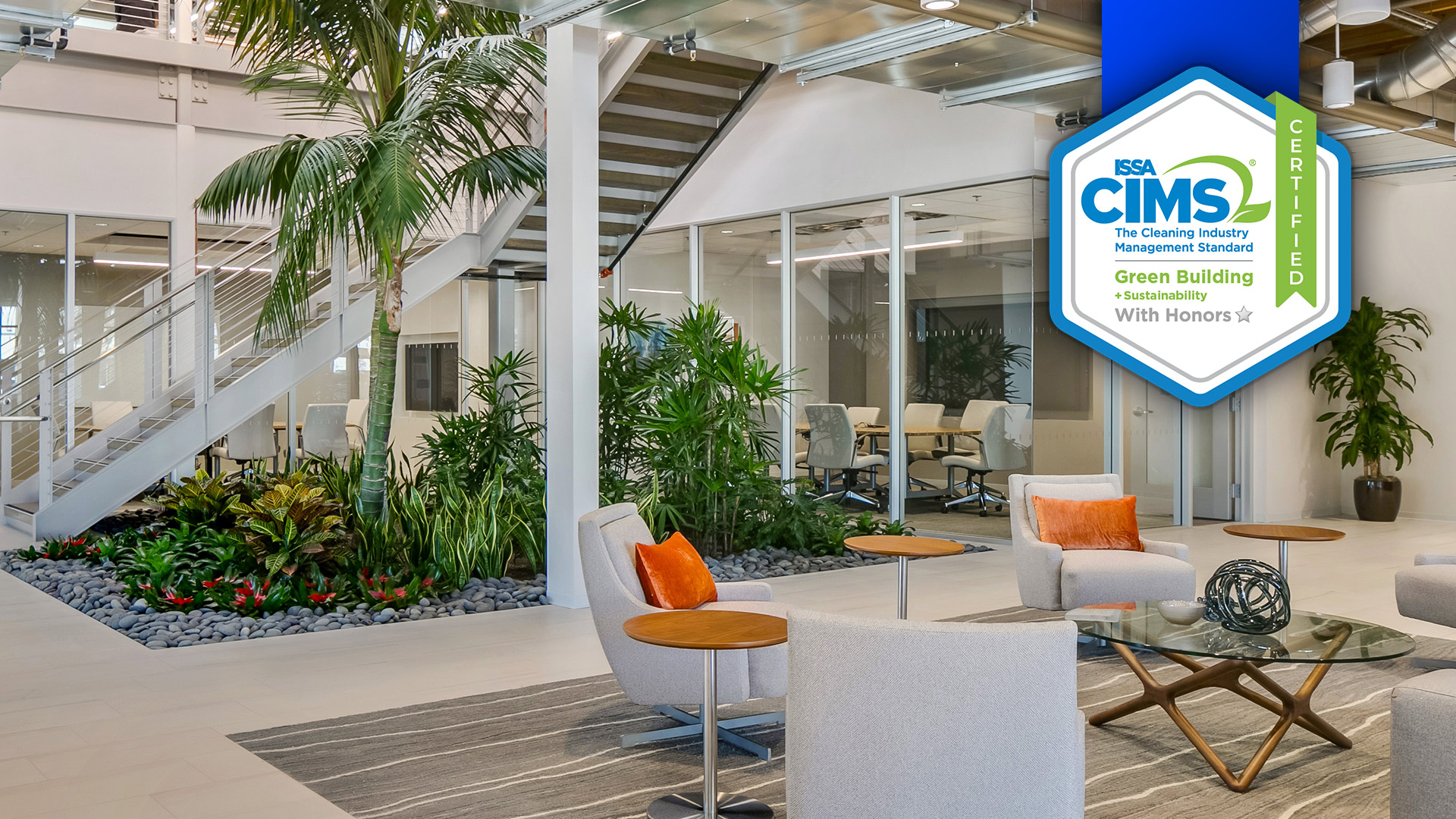
ABM recently achieved ISSA's Cleaning Industry Management Standard Green Building and Sustainability Certification with Honors (CIMS GB + Sustainability), becoming the first organization to achieve the certification at the Sustainability Green Building Honors level.
We sat down with Adam Klotch, Vice President of Operations Support & Client Success, and Suzanne Klatt, Director of Sustainability and Government Affairs, to discuss what the certification actually covers, and what the experience revealed about operational excellence and sustainability.
ISSA CIMS GB + Sustainability doesn’t yet have the name recognition of LEED. Can you give us some background on this certification?
Suzanne Klatt: ISSA’s CIMS GB + Sustainability is fundamentally a cleaning and management standard. The CIMS element is five core sections: Quality System, Service Delivery, Human Resources, Health and Safety, and Management Commitment. It evaluates documented SOPs and focuses on performance; none of it environmental on its own.
Adam Klotch: The Green Building certification is an optional add-on to CIMS certification aligned with the LEED for Existing Buildings: Operations & Maintenance (LEED EB: O&M) rating system. Once you’re CIMS GB certified, you can also pursue CIMS Sustainability, a new and advanced framework that focuses on environmental stewardship, equity and inclusivity, ethical business practices, and LEED V5 for Existing Buildings.
Klatt: So, the honors level reflects strength across all of it: cleaning management, Green Building, and sustainability. This is not a narrow sustainability assessment, but rather the cleaning foundation is what makes sustainability verifiable.
Why did ABM pursue CIMS + Sustainability certification?
Klotch: We wanted an objective benchmark that validated how we operate. We have thousands of documented processes, training programs, quality systems, and operational standards. The certification provided a structure that allowed us to organize those efforts and evaluate them against a recognized industry standard.
Klatt: There was also growing client demand. Sustainability has become a business expectation. Clients increasingly want to understand not only what organizations are committed to, but how those commitments are operationalized and who’s checking our work.
What surprised you most during the certification process?
Klotch: The scale of the effort. It really touches every part of the organization. Safety, training, operations, quality assurance, legal, leadership, frontline teams. It truly takes an entire organization working together.
Klatt: I was impressed by how naturally sustainability connected to so many parts of the business. Sustainability is often discussed as a separate initiative, but the certification process reinforced that it's deeply connected to operational excellence.
What does sustainability mean in today's facility environment?
Klatt: Sustainability has become table stakes. Clients, employees, and stakeholders expect organizations to operate responsibly and efficiently. The conversation has moved beyond environmental commitments and toward measurable outcomes.
Klotch: Sustainability is also broader than many people realize. It includes workforce development, safety, operational consistency, resource management, and the customer experience.
Why are standards becoming increasingly important?
Klatt: Standards provide accountability. They create a framework for measuring progress and validating outcomes. As sustainability expectations increase, organizations need ways to demonstrate that they are delivering on their commitments.
Klotch: Standards also help create consistency. One of the biggest benefits of the certification process was the opportunity to align operational practices across a large and complex organization.
How do certifications like CIMS GB + Sustainability support clients?
Klotch: Clients increasingly want proof. They want to know that operational processes are documented, measured, and continuously improved.
Klatt: Certifications provide another layer of confidence. They help demonstrate that sustainability and operational excellence are supported by real systems and processes.
What do you see ahead for the industry?
Klatt: I think sustainability will continue moving closer to core business operations. It will become less of a standalone initiative and more of an expectation built into how organizations operate.
Klotch: I also think we'll continue to see a stronger focus on consistency, workforce readiness, and measurable outcomes. The organizations that succeed will be the ones that can translate strategy into day-to-day execution.
Final thoughts
Klatt: Sustainability is ultimately about creating long-term value for clients, employees, and communities.
Klotch: And that requires operational discipline. The organizations that can consistently execute their standards will be best positioned for the future.
Explore more about sustainability at ABM.



.jpg)


%20(1).webp)

.webp)