
.svg)
Key Takeaways
- Workforce-driven sustainability: Hitting energy, certification, and efficiency targets depends on frontline employees executing standards consistently every day.
- Embedded operations: Sustainability succeeds when integrated into how work is performed, not bolted on as a separate initiative.
- raining and culture: Training builds capability, but culture creates the commitment that turns sustainability goals into daily action.
Transcript
Meeting sustainability targets takes emerging technology, reporting frameworks, operating strategies, and maintenance upgrades. These investments are easy to see on paper. But the element that determines whether they actually deliver is harder to put on a balance sheet: people.
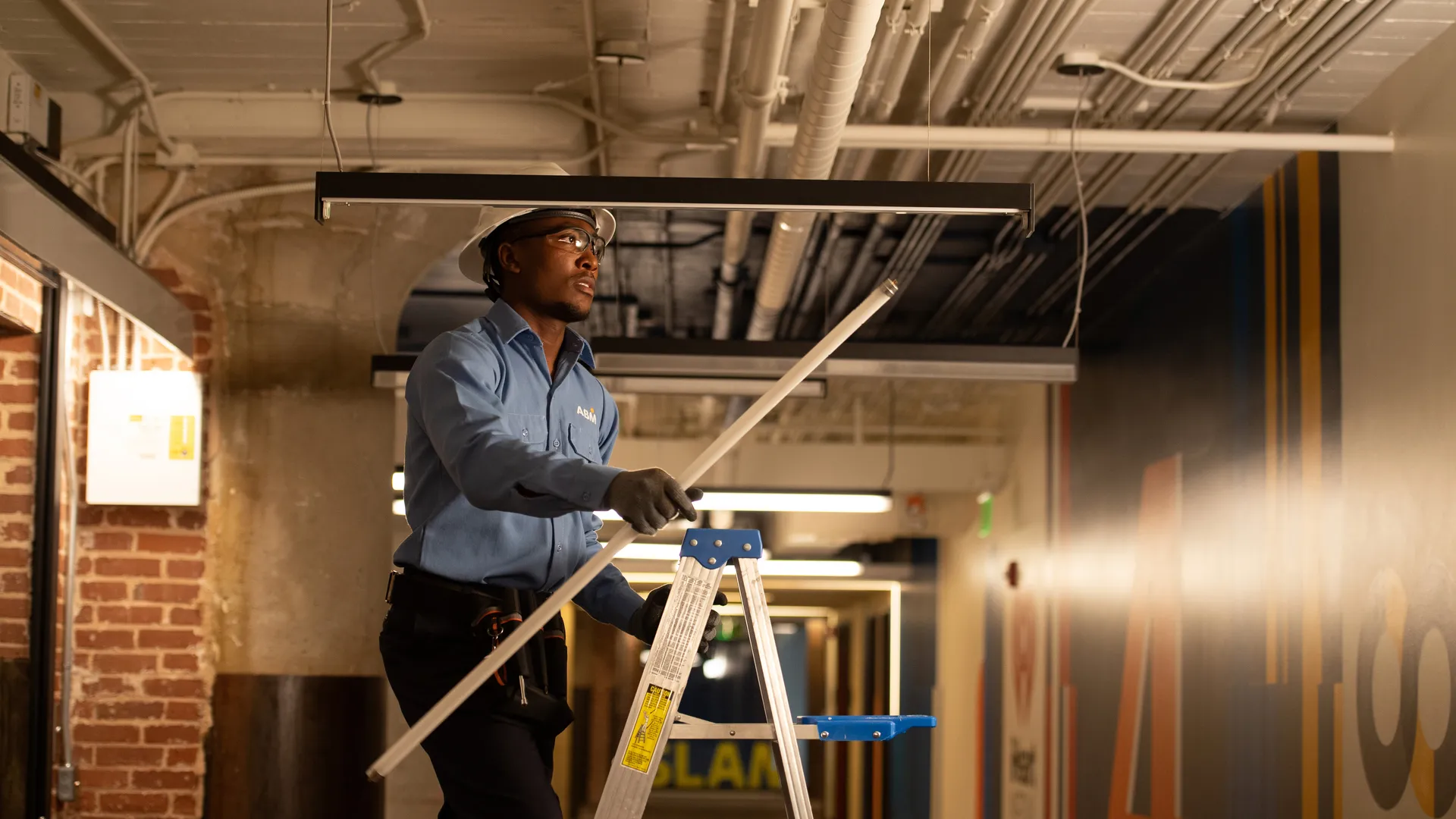
Whether the goal is reducing energy use, improving indoor environmental quality, supporting green building certifications, or increasing operational efficiency, success depends on frontline employees consistently executing operational standards every day.
That makes sustainability as much a workforce challenge as an environmental one.
Why sustainability often breaks down at the frontline
Most sustainability programs are developed at the corporate level and implemented at the site level. At best, the risk is that employees do not understand expectations, receive inconsistent training, or lack visibility into broader organizational goals.
At worst, the multi-vendor model so common in facility operations means sustainability initiatives never get off the ground. When services are split across many providers, sustainability data becomes nearly impossible to compile, and fragmented systems and vendor silos obscure the very inefficiencies a sustainability program is meant to fix.
The problem is rarely intent, but adoption.
Common sustainability adoption challenges
Organizations often spend significant time developing sustainability strategies while spending far less time preparing employees to implement them.
Sustainability must be embedded into operations
The most successful organizations do not treat sustainability as a separate initiative. They integrate it into existing operational systems.
“The biggest area where clients are struggling to operationalize sustainability is in data. The integration of systems empowers facilities managers to prioritize their sustainability efforts. You can’t manage something you can’t measure: and with ABM ConnectTM, we can demonstrate how to make cleaning more efficient and more green at the same time,” said Suzanne M. Klatt, Director of Sustainability and Government Affairs.
Rather than asking employees to take on additional responsibilities, sustainability becomes part of how work is performed. It becomes operational.
Training creates consistency
Training is one of the most important but often overlooked drivers of sustainability performance. A lack of education and personal responsibility surrounding sustainability can result in preventable issues like landfill-bound trash being put in recycling bins, occupants letting water run in restrooms, and more.
Employees need more than awareness. They need practical guidance that connects organizational objectives to day-to-day responsibilities, including standard operating procedures, quality assurance expectations, documentation requirements, compliance standards, and sustainability best practices.
During ABM's CIMS GB + Sustainability with Honors certification assessment, training consistency and verification were identified as critical factors in maintaining operational excellence. Sustainability outcomes become more predictable when training becomes more consistent.
For a sustainability campaign to be successful, it is also important to encourage building occupants to contribute. An internal campaign associated with personal responsibility can bridge the gap between predicted and actual building performance. A sustainability roundtable found that occupant sustainability engagement can lead to energy and other savings averaging 9-10%.
Culture matters as much as employee training
Training creates capability, but it is culture that creates commitment.
Organizations with strong sustainability cultures help employees understand why their work matters and how it contributes to broader outcomes. As Klatt noted during ABM's recent discussion with ISSA, "We often see a real hunger from both clients and employees to understand what we're doing around sustainability."
That interest creates an opportunity for organizations to build stronger connections between operational execution and organizational purpose.
Adam Klotch, Vice President of Operations Support & Client Success at ABM, frequently emphasizes that operational consistency requires organization-wide participation. "It really does take the full efforts of the organization,” he said.
That includes leadership, training teams, quality assurance programs, site managers, and frontline employees.
Technology can support sustainability goals, but people ultimately determine whether standards are followed consistently.
The future of sustainability is workforce-driven
As sustainability expectations continue to evolve, organizations will need to invest as much in people as they do in technology.
The organizations that succeed will be those that:
- Train consistently
- Communicate clearly
- Reinforce accountability
- Connect sustainability to daily operations
- Build cultures that support continuous improvement
Sustainability outcomes are not created by policies alone. They are achieved by the people responsible for executing them every day.
Explore more about sustainability at ABM.



.jpg)