The rise of verifiable sustainability

.svg)
Key Takeaways
- Proof over promises: Sustainability is now table stakes, and clients want documented, measured, independently validated results.
- Third-party validation: Certifications like LEED, WELL, and CIMS GB + Sustainability confirm sustainability practices are actively implemented, not just documented.
- Competitive advantage: Organizations that pursue certification against these standards are able to support client goals, strengthen stakeholder trust, and deliver measurable value.
Transcript
Sustainability has become integrated into corporate messaging and is no longer a “nice to have.” Nearly every organization now has environmental goals, ESG commitments, or sustainability initiatives. What was once a differentiator is now a baseline expectation, and the people who run buildings have grown more sophisticated about how they evaluate it.
Facility leaders, procurement teams, and real estate decision-makers increasingly expect more than sustainability commitments. They expect to see that green cleaning protocols, energy management strategies, and waste reduction programs deliver measurable operational and environmental benefits. Just as importantly, they want those outcomes to be documented, quantified, and validated through credible third-party standards and reporting.
Driven by investors, regulators, employees, clients, and building occupants, the conversation around sustainability has shifted from promises to proof.
How sustainability expectations have changed
There’s a growing consensus that sustainability needs to evolve beyond reporting into execution. It’s no longer enough for investors and clients to hear about goals. They need tangible results showing progress.
For facility service providers and building operators, this shift is changing how success is measured. This shift is changing how success is measured. ABM's own sustainability report reflects it: this year marked the first time the company's greenhouse gas inventory was verified by an independent third party.
The growing role of third-party validation
One of the most effective ways organizations demonstrate credibility is through independent assessment. Third-party certifications verify that sustainability practices are not only documented but actively implemented.
As Suzanne Klatt, ABM's Director of Sustainability and Government Affairs, explains:
"Sustainability is not just a concept. It's embedded in how we operate, how we serve our clients, and how we deliver value every day."
That distinction matters.
Clients increasingly want confidence that sustainability commitments are supported by operational systems, workforce training, quality assurance processes, and measurable outcomes. Independent certifications provide a framework for demonstrating those capabilities.
Validating sustainability holistically
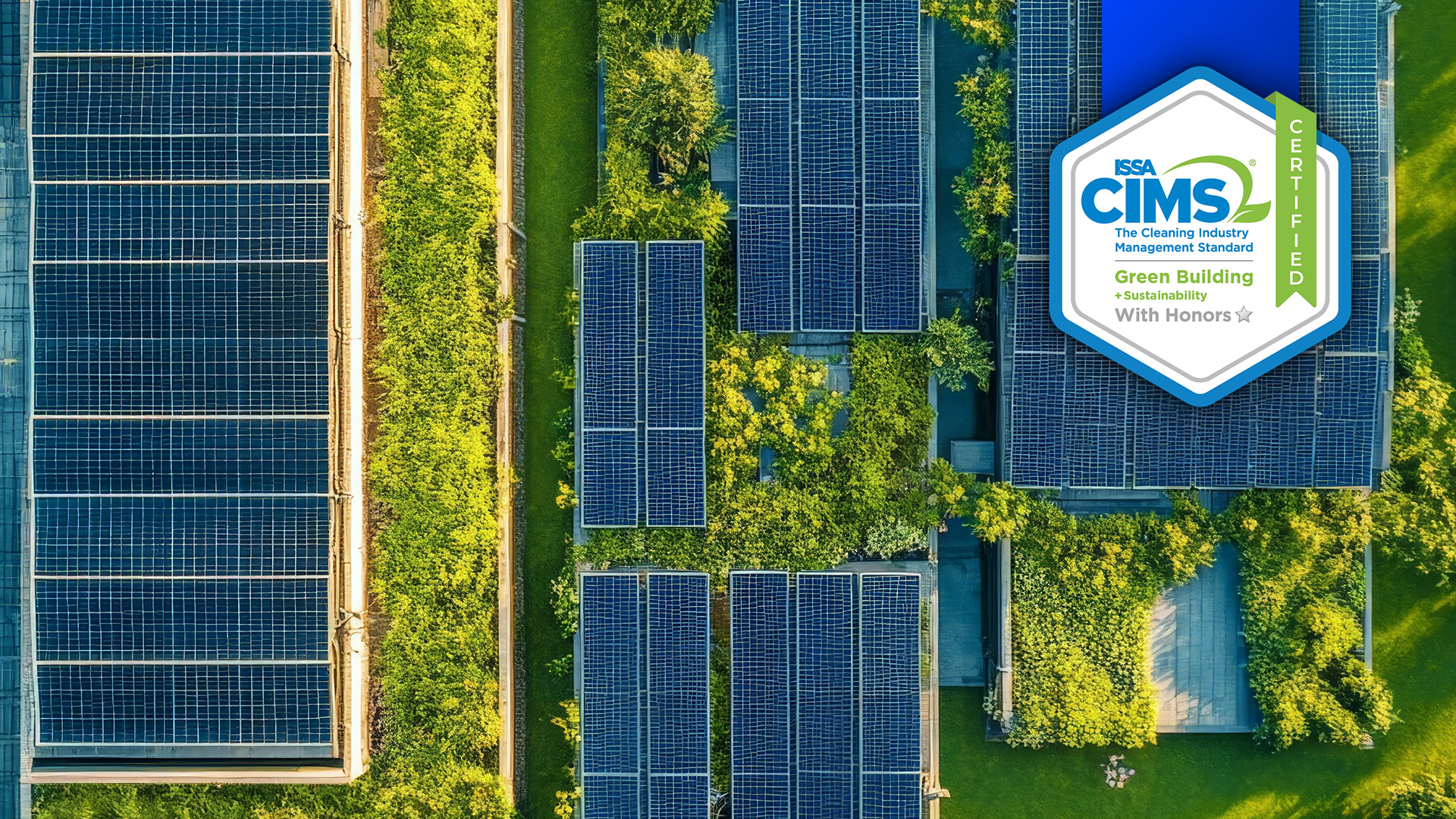
Many sustainability assessments focus narrowly on green outcomes: lower energy use, smaller carbon footprints, better waste management. The ISSA’s Cleaning Industry Management Standard Green Building and Sustainability Certification (CIMS GB + Sustainability) takes a deeper approach. CIMS GB + Sustainability isn't an environmental certification with a cleaning component. It's a cleaning and facility management standard with sustainability built on top of it.
That structure matters. The environmental piece is grounded in verified cleaning practice. The social and governance pieces are specific, documented requirements, fair-wage attestations, anti-discrimination and anti-trafficking policies, and climate-risk assessments that organizations build and submit as part of certification. Together, CIMS GB + Sustainability lets clients confirm each part of ESG on its own, rather than taking one blanket statement at face value.
Compare this approach to LEED, the most widely used green building rating system in the world. It scores buildings on factors like energy and water use, waste diversion, indoor air quality, and materials, translating sustainability into measurable, verifiable criteria.
For facilities, the LEED Operations and Maintenance track matters most. It focuses on how a building performs after occupancy, which depends directly on day-to-day cleaning, energy management, and maintenance practices.
A similar benchmark, WELL, shifts the focus from the building to the people inside it. It evaluates how the built environment supports human health and well-being across categories like air, water, light, comfort, and cleaning protocols.
LEED and WELL certify a building. They score energy and water use, indoor air quality, and other important metrics tied to a specific address. What they do not reveal is a deeper look at the organization’s operational discipline.
ISSA's standard requires documented SOPs, quality management, workforce training, safety compliance, and business continuity planning across its five core management sections. The Green Building element (CIMS-GB) looks at the specific green cleaning products, equipment, and waste programs that reduce environmental impact. The Sustainability chapter requires full Green Building compliance, then adds its own social equity and governance requirements. Assessors reviewed 50-60 ABM locations across multiple markets, not one property.
All three certifications are complementary rather than competing. A LEED O+M or WELL project depends heavily on the day-to-day cleaning and engineering execution happening in the building, which is exactly what CIMS + Sustainability validates on the provider side.
Organizations that have established operational standards are often better positioned to support clients pursuing these certifications and goals.
What verifiable sustainability looks like in practice
For organizations pursuing sustainability leadership, verification often starts with operational discipline.
ABM's achievement of ISSA's Cleaning Industry Management Standard Green Building and Sustainability Certification with Honors illustrates this shift. The certification process included extensive documentation review, onsite assessments, workforce engagement, and evaluation of management systems across multiple locations.
Importantly, the certification assessed more than environmental practices. It evaluated quality systems, service delivery, workforce management, health and safety, and organizational commitment to continuous improvement.
Klatt explains, "The certification is a way to operationalize sustainability. It helps translate sustainability goals into daily actions and measurable outcomes."
For facility leaders, that distinction matters: a certification like CIMS GB + Sustainability turns sustainability from a stated commitment into a verified operating standard, one clients can count on regardless of which building they walk into, and one that’s only as strong as the documented cleaning and facility management practice underneath it.
The future of sustainability is verifiable
The next phase of sustainability leadership will not be defined by who makes the boldest commitments, but by who can demonstrate progress. That means moving beyond sustainability as a communications initiative and treating it as an operational capability.
For facility leaders, this requires:
- Standardized processes
- Workforce alignment
- Performance measurement
- Continuous improvement
- Independent validation
The organizations that embrace this approach will be better positioned to support client goals, strengthen stakeholder trust, and deliver measurable value.
Explore more about sustainability at ABM.


%20(1).webp)
.webp)