From reactive to real-time: rethinking facility operations


.svg)
Transcript
Modern facility operations are being redefined by a simple but powerful shift: moving from reactive oversight to real-time operational intelligence.
For years, many organizations have relied on manual processes, periodic inspections, and reactive communication to manage cleaning and maintenance. While functional, these approaches create gaps in visibility, delay issue resolution, and make it difficult to consistently meet rising expectations, especially in complex, high-traffic environments.
They also don’t provide assurance that contracted services are being delivered as expected or improve accountability across service teams. Organizations need better data to make decisions about staffing, budgeting, and resource allocation.
That’s why the manual, reactive model is no longer sufficient.
The limits of reactive operations
In traditional service models, facility teams often lack clear, real-time insight into what is happening across their spaces:
- Service verification is inconsistent or delayed
- Communication happens after issues are noticed
- Facility asset concerns are identified sporadically
- Performance data is fragmented across systems
This creates operational ambiguity where teams are left asking: Was the space serviced? When? By whom?
When facility leaders lack real-time visibility, they face increased operational risk, inconsistent workplace experiences, and limited ability to demonstrate service value to stakeholders.
What real-time operational intelligence looks like
At a large, multi-building corporate campus spanning nearly 3.5 million square feet in New York City, ABM partnered with client stakeholders to implement a fundamentally different model built on real-time visibility and data-driven execution.
The campus facility team had previously relied on manual tracking processes that delivered limited visibility into cleaning operations and service execution. Without real-time communication and efficient issue-reporting mechanisms, maintenance management was reactive and response times were delayed.
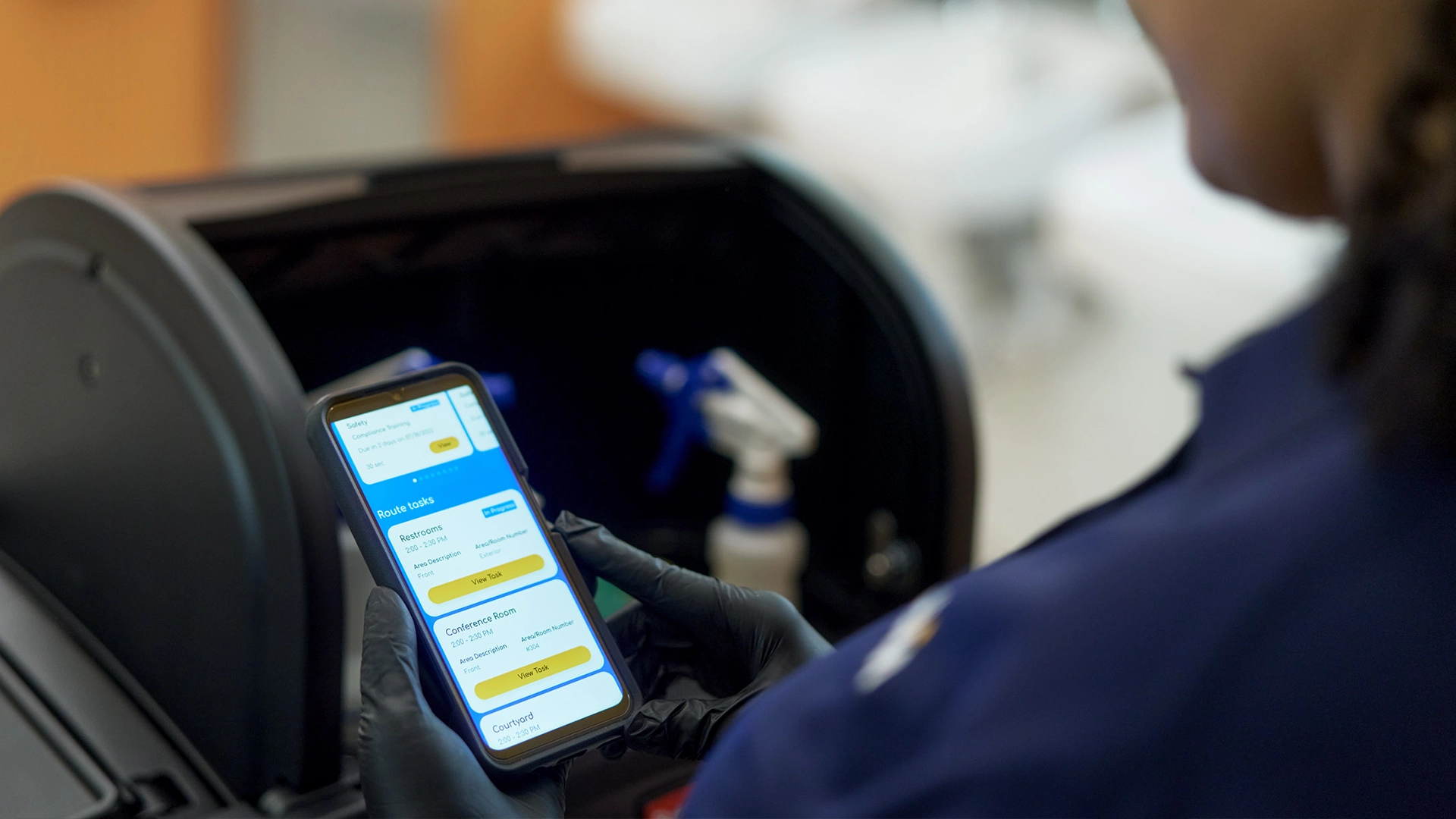
By using ABM ConnectTM’s team member app with QR-based task validation, service delivery is now tracked continuously against the daily plan. Every completed task, missed scan, and reported issue feeds into a centralized system of record.
This enables:
- Immediate visibility into service execution across all spaces
- Employee-level performance tracking, improving accountability
- Real-time issue reporting, with photo documentation and automated routing
- Integrated workflows connecting frontline teams with broader facility management systems
Instead of relying on periodic checks, operations are continuously monitored and actively managed.
From visibility to performance
Real-time intelligence doesn’t just provide transparency. It also drives measurable performance outcomes.
At this campus:
- Documented service completion increased from 40% to over 93% month over month, providing stakeholders with confidence that contracted services were being delivered consistently across the campus while creating a verifiable record of performance.
- Hundreds of facility issues have been identified and resolved quickly, with an average resolution time under one hour.
- Operational data is used to continuously refine staffing and service delivery. By understanding where service demand occurs and when, facility leaders can make more informed staffing decisions that reduce unnecessary labor deployment while ensuring resources are focused on the areas that matter most.
This shift transforms data from a reporting mechanism into an operational lever.
Enabling proactive operations
With continuous visibility, facility teams can move upstream:
- Identifying issues before they impact occupants
- Adjusting resources based on real usage patterns
- Maintaining consistency across shifts and buildings
- Providing stakeholders with clear, defensible performance data
The result is a more proactive, controlled, and resilient operation. While these metrics demonstrate operational improvement, their impact extends beyond facility teams. Faster issue identification and resolution help create cleaner, safer, and more functional environments for employees and visitors. By reducing disruptions and maintaining consistent service standards, organizations can enhance workplace experience while reinforcing confidence in facility operations.
A new standard for facility management
As workplace environments become more dynamic and experience-driven, expectations for facility performance will continue to rise.
Organizations can no longer rely on periodic oversight and reactive response. They need systems that provide:
- Real-time insight
- Documented accountability
- Integrated workflows
- Actionable data
This is the foundation of modern facility operations. Real-time operational intelligence is not simply about knowing what happened. It’s about creating measurable business value. By increasing service visibility, improving accountability, accelerating issue resolution, and enabling smarter labor decisions, organizations can improve workplace experiences while maximizing the return on their facility services investment.
In this case, the shift to real-time operational intelligence enabled a transition from uncertainty to clarity, from reaction to anticipation, and from service delivery to true operational control.
This shift that is increasingly becoming the standard, and ABM is at the forefront of it.
Learn how ABM uses real-time data to improve your operations with ABM Connect.





%20(1).webp)

.webp)