Electrification without downtime for complex portfolios


Key Takeaways
- The real choice isn’t decarbonization versus uptime; it is whether infrastructure was engineered to deliver both.
- ABM’s Infrastructure-as-a-Service model funds electrification through operational savings, requiring zero upfront capital investment.
- Resiliency pays for itself: every dollar spent upfront can save five to ten dollars versus retrofitting later.
Transcript
In the first part of this series, we looked at what it takes for a facility partner's sustainability claims to hold up under scrutiny, as well as how to report that data accurately. This article considers a different sustainability pressure point: the operational one.
For mission-critical facilities, decarbonization commitments run headlong into a harder requirement that can't be negotiated away: uptime. Data centers, hospitals, transit systems, and other mission-critical portfolios all have ambitious decarbonization targets. Yet, the underlying power infrastructure that would help them reach these targets is often considered a reliability risk. Reliability is imperative: every minute of an outage in a data center, for instance, costs an average of $9,000.
Whether low-emissions power infrastructure is actually risky is one thing. But the bigger obstacle is financial. The kind of on-site generation and storage systems that reduce dependence on grid power have historically been capital intensive, often running $2 million to $5 million per megawatt.
At the same time, sustainability is a top priority. Data center operators are actively decarbonizing their facilities, mainly through renewable power procurement. Customers are motivating this drive: sustainability certifications and renewable energy commitments are increasingly a standing requirement in RFPs. Likewise, investors continue to evaluate ESG performance as part of how they assess these operators, regardless of how publicly a given company is willing to talk about its climate targets.
Across mission-critical facilities, leaders are being asked to weigh reliability and emissions reduction as though they are diametrically opposed. But the question isn't whether to choose between decarbonization and reliability. It's whether the system was engineered to deliver both from the start.
Meeting decarbonization and uptime objectives
The infrastructure to reduce emissions and the infrastructure to guarantee uptime are frequently the same when engineered correctly. Two client case studies from ABM’s 2025 Corporate Sustainability Report demonstrate how the physical assets that reduce carbon and the assets that protect uptime overlap.
In California, L.A. Unified School District set out to electrify 200 buses at one of its bus yards, moving off traditional carbon-emitting vehicles and onto sustainable EV fleet charging. Reliability and energy resilience were non-negotiable requirements for the retrofit.
As Robb Lichtman, Senior Business Development Manager, eMobility, put it: “It’s not cheap, and there’s often a real trade-off between resiliency and ROI. But bulletproof resilience is a requirement for school bus electrification. If you don’t have buses to pick up kids, what are you going to do?”
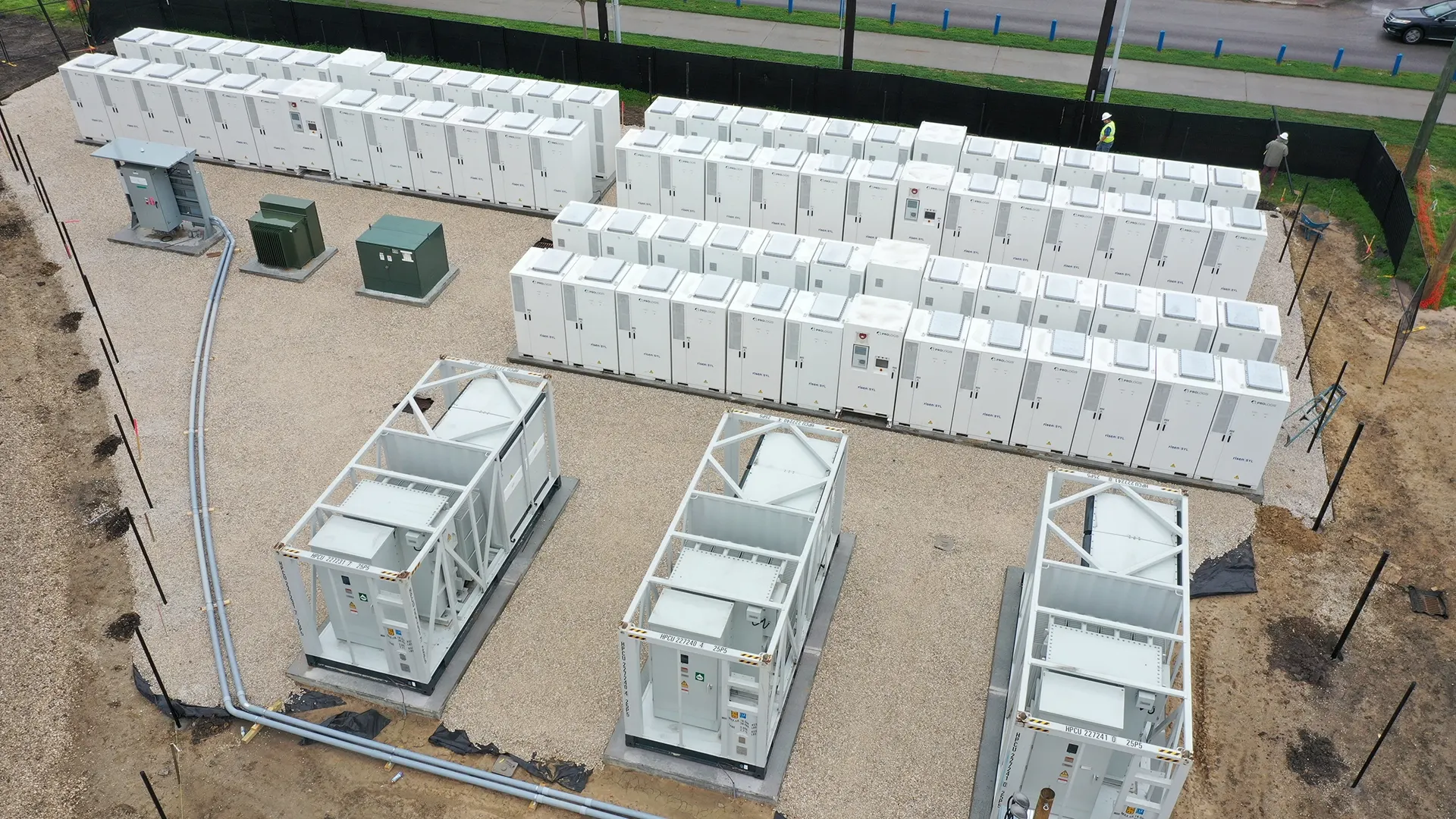
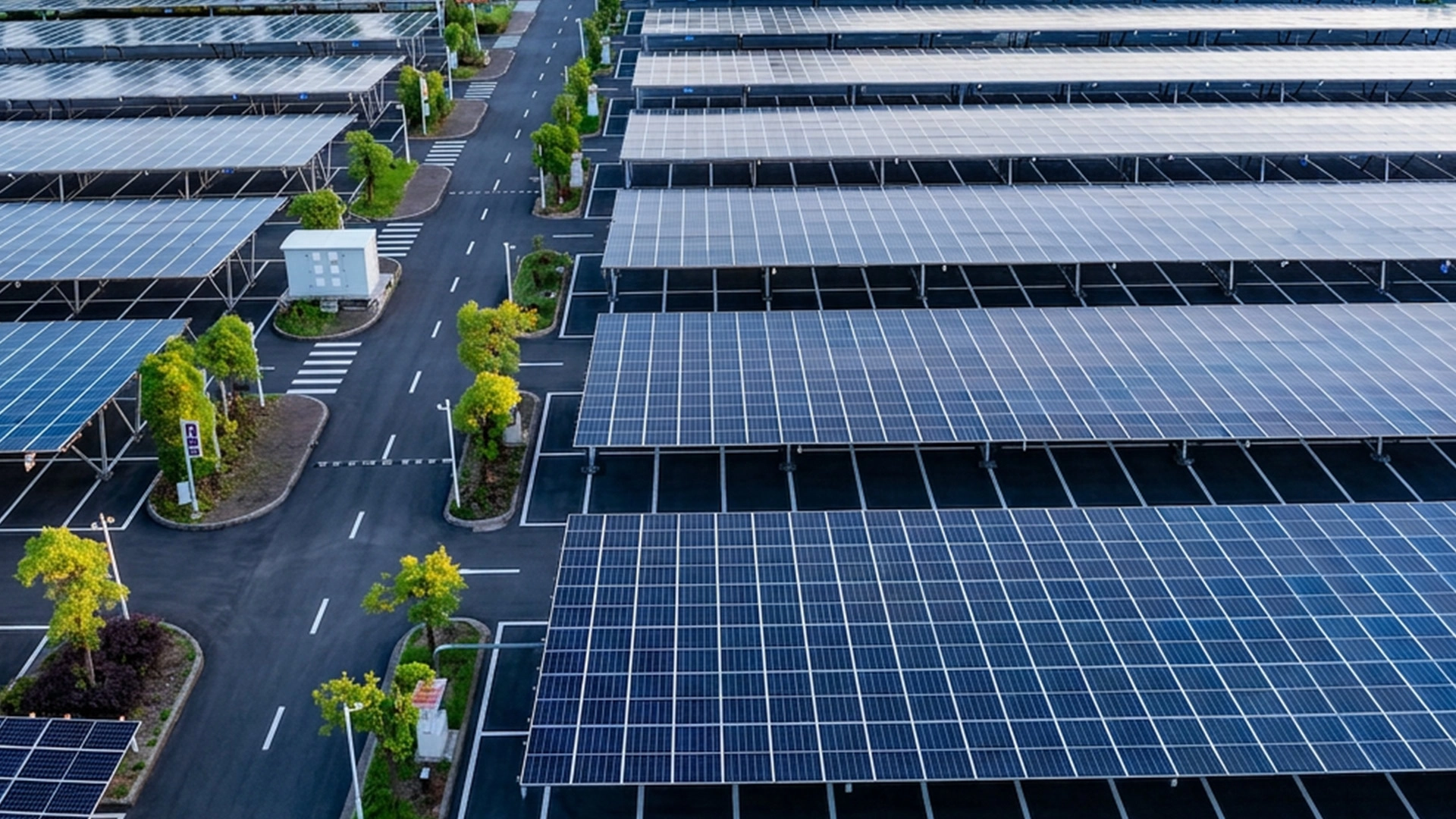
ABM designed a solar canopy over the bus yard, with solar panels that generate renewable energy while providing shaded parking that directly supports electric bus charging. Battery energy storage captures excess solar energy collected during the day and delivers it back to the electric vehicles through the charging infrastructure during peak times, overnight charging, or outages. Paralleling switchgear and supply controls balance microgrid loads and allow temporary generation to connect if a prolonged utility outage occurs.
That reliability requirement shaped the yard’s day-to-day operations and maintenance strategy, built in layers rather than resting on a single point of failure. The site has more charging ports installed than its 200 buses require, so a bus can move to a spare stall while a charger is serviced instead of sitting idle. A mobile backup charger, effectively a portable unit on wheels connected by a 100-foot extension cord, can reach any bus position through outlets placed strategically around the yard. On-site staff cover the yard from Sunday morning through Thursday night, because the buses have to be ready for Monday morning school routes.
The outcomes span all three concerns leaders are typically forced to weigh separately
- On cost and emissions, buses now charge using a combination of utility and clean solar energy, reducing operating costs and emissions.
- On reliability, charged buses can provide power to support the local utility during outages, enhancing grid resilience and contributing to regional grid stability.
- And, on the financial side, the district gained a new revenue stream entirely: the ability to monetize excess capacity by selling surplus power back to the grid.
What began as an electrification project became, in effect, a small power plant with its own income line.
This project is not the only case study proving the value of decarbonization projects in mission-critical environments. ABM was selected by the Alexandria, Virginia Transit Company (DASH) to deliver critical EV charging infrastructure that supports the growing electrification of the city’s public bus fleet.
ABM provided and installed an in-route pantograph charger, accompanying power cabinets, electrical infrastructure, and civil foundation work. The solution enables DASH buses to charge while in service, expanding route flexibility, and supporting uninterrupted operations for Alexandria’s fast-growing electric fleet while reducing GHG emissions.
The same layered logic applies beyond transportation. Any mission-critical facility or campus that can’t tolerate downtime, whether it’s a transit fleet, a hospital, or a data center, benefits from the same principle: build in more than one way to keep running before an outage forces the question.
The infrastructure behind the approach
Delivering systems like these generally requires three things working together.
- Engineering capable of designing power systems for dual use from the start;
- A delivery model that treats electrification as part of ongoing facility operations rather than a separate capital project; and
- Continuous monitoring. A battery system or microgrid that isn't actively managed after installation can quickly become a liability.
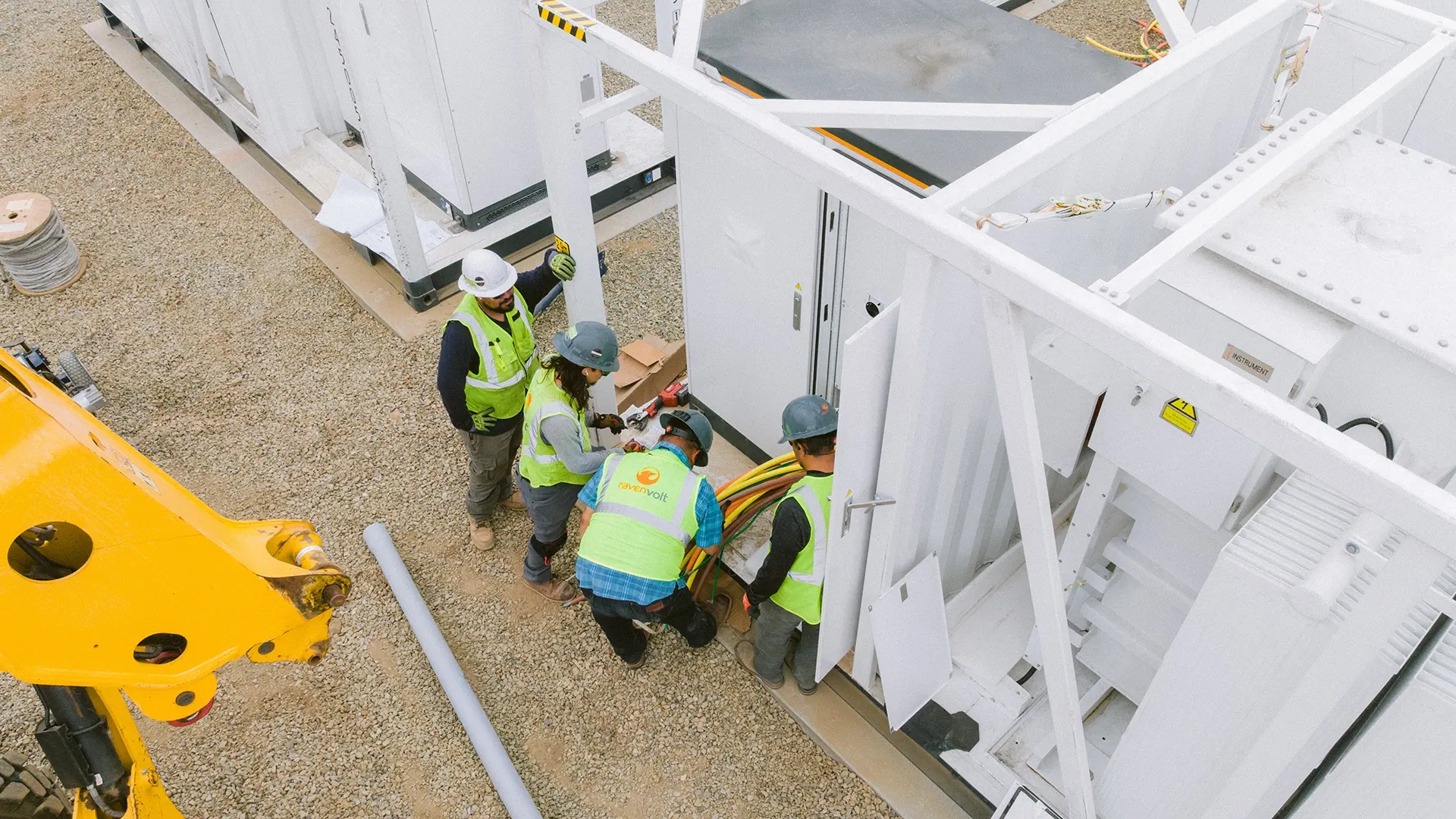
ABM's approach is one example of how that combination gets built in practice. RavenVolt provides the engineering and renewable energy technology, such as microgrids that include diesel or natural gas generation, layered on top of an Uninterruptible Power Supply (UPS). For power continuity or uptime, this pairing offers instantaneous protection. Each installation connects to a monitoring platform for real-time performance visibility rather than periodic manual checks.
That work is folded into an integrated facility services model that combines facility operations, engineering, and infrastructure expertise. Mission-critical facilities require solutions that work together in a whole-portfolio approach. Microgrids, battery storage, EV charging, and on-site generation must function as a connected ecosystem to reach 99.999% uptime. Any steps toward decarbonization cannot detract from operational performance.
Supporting platforms handle the operational specifics: remote management and diagnostics for EV charging infrastructure, a technology hub for technician training and product testing, and a network operations center that aggregates data across charger networks and utility feeds for ongoing visibility. For the most uptime-sensitive environments, that same logic extends to dedicated critical power and cooling management, with structured assessments aligned to site-specific safety requirements and around-the-clock coverage.
The aggregate results across ABM's client base in 2025 give a sense of what this looks like at scale: more than 200 million kWh of energy saved and roughly 141,627 tCO2e in emissions savings. These figures reflect the accumulated result of infrastructure engineered, at each site, to deliver reliability and decarbonization as the same outcome rather than as competing priorities.
The cost factor
Reliability and operational complexity are one set of concerns. Upfront cost is a separate one. Many facility leaders balk at investing in infrastructure when there are so many other competing priorities.
Decarbonization measures do not always require significant upfront capital to get started. Financing structures like ABM's Infrastructure-as-a-Service model allow organizations to fund modernization through the operational savings the upgrades themselves generate. This model turns what would otherwise read as a capital expenditure into something closer to a self-funding investment. Often, the capital is already available; but it sits inside an existing operating budget rather than a dedicated capital line.
That math holds up on the reliability side of the ledger too. As Lichtman put it: “Every dollar spent on resiliency during initial construction is worth five to ten dollars on the other side, because it costs substantially more to retrofit these things later. It is so much easier and cost effective to build it in from the beginning.”
In practice, that means developing a plan specific to a site's financial structure, ownership preferences, and sustainability goals, covering technologies like solar, battery storage, HVAC, lighting, and EV charging, then executing that plan with no upfront capital required from the client.
That kind of financing structure only works, though, if the organization delivering it also has visibility into where the savings are actually showing up. With the right data, a facility can shift from reactive troubleshooting toward predictive maintenance, gathering real-time data and tracking patterns to forecast equipment failures before they become costly outages.
The takeaway for portfolio decisions
The choice in front of most facility leaders isn't between uptime and emissions reduction, or between sustainability and capital discipline. For most facility leaders, the real choice is about how the infrastructure gets built in the first place. Systems engineered and financed from the start to deliver reliability, decarbonization, and cost savings together, phased to match the scale of a specific site or fleet, tend to hold up. Systems assembled piecemeal to satisfy a sustainability commitment, without that same operational and financial planning behind them, tend not to.
Whether the entry point is a single pantograph charger or a full microgrid with grid resale capability, the more durable question for any facility leader isn't whether to decarbonize. It's whether the partner delivering that infrastructure is also the one accountable for keeping it running.
In the final part of this series, we turn to this final element: the people behind the infrastructure. A battery, charger, or microgrid is only as reliable as the technician who maintains it. With the right training and a self-performing workforce model, ABM is able to upskill and measure its workforce and safety culture. Read on to learn why that matters.
Source 1: Cortex.Ravenvolt.com
Source 2: Ravenvolt.com Solutions
Source 3: Databank.com Resources
Source 4: Fticonsulting.com Insights