
.svg)
Key Takeaways
- Safety is not a footnote: ISSA CIMS dedicates an entire core section, Health, Safety, and Environmental Stewardship, to regulatory compliance and worker protection, independent of any Green Building or Sustainability criteria.
- Compliance is documented, not assumed: Hazard communication, chemical handling, PPE, and bloodborne pathogen protocols all require written programs and proof of training, not just good intentions.
- The baseline environmental policy starts here: Before Green Building or Sustainability ever apply, Section 4 already requires a written environmental policy with a commitment to pollution prevention and continual improvement.
Transcript
Most sustainability coverage skips straight to the parts that photograph well: green products, carbon inventories, LEED points. It is an understandable instinct. But it skips over the section of the CIMS + Sustainability standard that arguably matters most to the people actually doing the work: Section 4, Health, Safety, and Environmental Stewardship.
This section has nothing to do with certifications or client-facing claims. It is about whether a cleaning organization protects the people it employs, and whether it can prove it.
What Section 4 actually requires
The standard is specific. It requires:
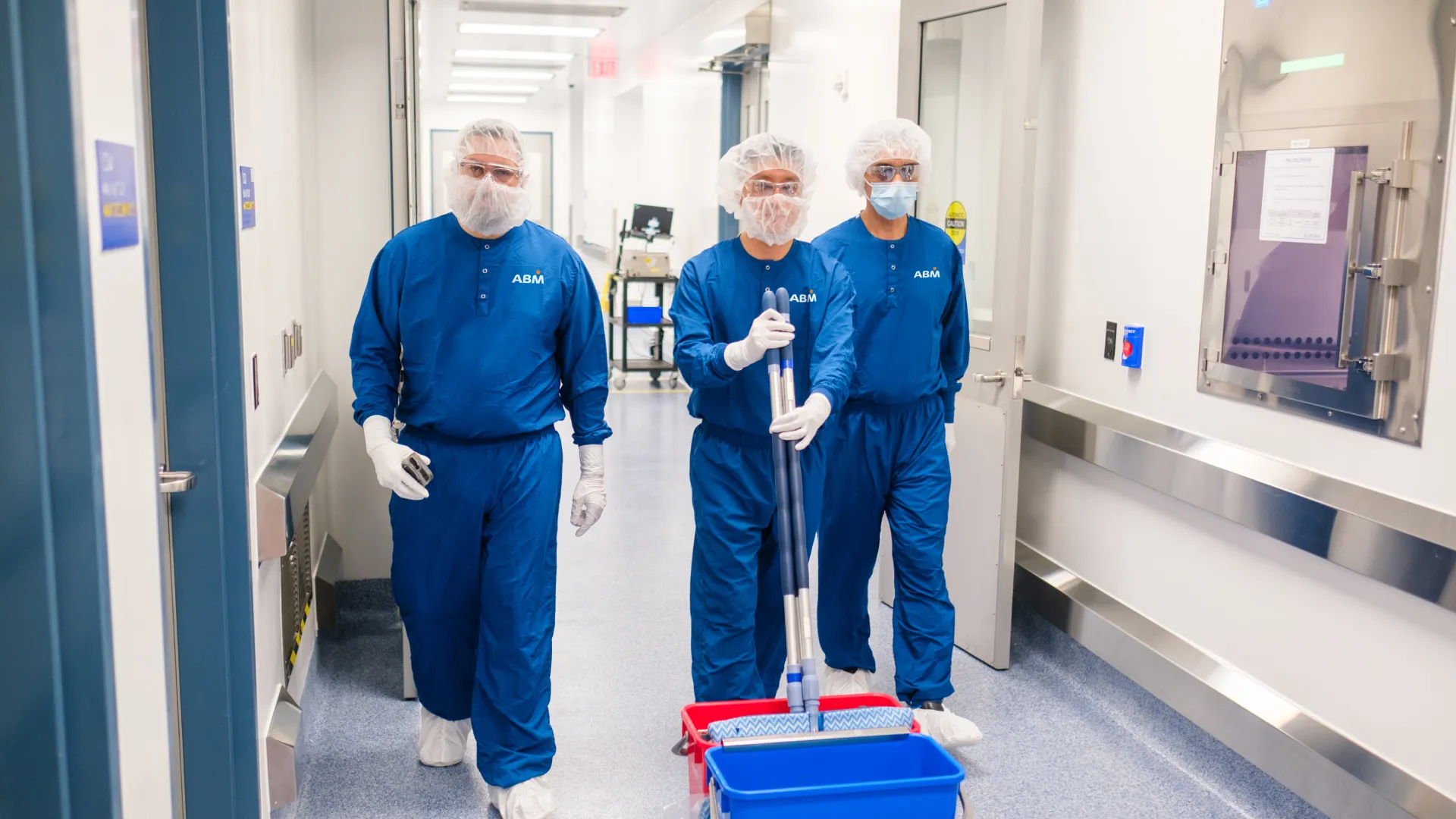
- A written hazard communication program compliant with the OSHA Hazard Communication Standard, including a complete, accurate chemical inventory and Safety Data Sheets that match the current formulation of every product on site.
- Documented training for every employee who handles chemicals, on both the use and the hazards of those chemicals, plus required container labeling.
- A spill containment plan and a waste disposal and recycling plan, each with documented employee training.
- Selection and use of Personal Protective Equipment (PPE), documented and compliant with federal and state requirements.
- For any organization whose cleaning personnel may encounter blood or other potentially infectious material: a written Exposure Control Plan reviewed annually, annual training on bloodborne pathogen hazards and proper PPE use, a written blood-spill cleaning procedure, an offered Hepatitis B vaccine, and training on handling found sharps.
- Regular workplace inspections by a qualified person to identify defective equipment or unsafe conditions.
None of this is optional guidance; it is all mandatory for certification.
The environmental policy starts before Green Building does
One detail that tends to get lost: Section 4 also requires a written environmental policy, appropriate to the scale of the organization's operations, with a stated commitment to pollution prevention and continual improvement, reviewed at least every two years and communicated to employees.
That is a foundational environmental commitment sitting inside the core safety section, well before Green Building (CIMS-GB) or the Sustainability chapter ever come into play. It is a reminder that environmental responsibility is not bolted onto CIMS + Sustainability as an add-on. A baseline version of it is already built into how the standard defines a well-run cleaning organization.
Why this matters to clients, not just regulators
Safety compliance can read as background infrastructure, the kind of thing that only matters when something goes wrong. But for facility leaders evaluating a service provider, it is a leading indicator of everything else.
An organization that can produce a current chemical inventory, matched Safety Data Sheets, and documented bloodborne pathogen training for every applicable site is an organization that keeps accurate, current records as a matter of course. That is the same operational discipline that makes quality scores reliable, complaint resolution consistent, and sustainability claims verifiable in the first place.
“Safety, training, operations, quality assurance, legal, leadership, frontline teams. It really touches every part of the organization,” said Adam Klotch, Vice President of Operations Support & Client Success at ABM, describing the scope of ABM's CIMS + Sustainability with Honors assessment.
ABM's own safety practice includes mandatory new-hire safety training within an employee's first five days on the job, part of a broader ThinkSafe culture built around treating safety as a daily habit rather than a periodic requirement. In 2025, ABM launched its first enterprise-wide safety training program for all staff and management, reaching a 98.5% completion rate in its first year, with plans to refresh the content annually.
On the observation side, ABM expanded its Safe Work Observation Program into a broader Risk Management Information System in 2025, recording more than 721,000 individual safety interactions that year. Real-time conversations between frontline leaders and team members catch and correct unsafe behavior before it becomes an incident rather than after one.
ABM is also pursuing ISO 45001 certification in the U.S., building toward an externally benchmarked safety management system that complements, rather than duplicates, what CIMS + Sustainability already requires.
Assessors reviewing a certification application do not just check whether a safety policy exists. They check whether it has been implemented: training records, inspection logs, exposure control plans that have actually been reviewed on schedule. That is a meaningfully higher bar than most procurement checklists apply, and clients rarely ask about it directly, even though it underpins everything they do ask about.
Operational discipline includes keeping people safe
The rest of this series has shown that sustainability outcomes depend on operational discipline: standardized processes, trained teams, documented systems, independent verification. Section 4 tests that discipline against something with no margin for error.
An out-of-date chemical inventory, a missing PPE record, an Exposure Control Plan that has not been reviewed in years: these are not administrative gaps. They show up as injuries, incidents, and liability long before they show up as a missed sustainability target.
For organizations pursuing CIMS + Sustainability, or evaluating a provider that has, Section 4 is worth asking about directly. It is not the part of the story that gets the press release. It is the part that makes the rest of the story credible.
Explore more about sustainability at ABM.