Resilience is won before the power goes out


Key Takeaways
- Outage response starts long before the outage. The systems that perform in the critical first seconds are the ones that were tested, maintained, and designed for maintainability months or years earlier.
- Predictable weather events demand a playbook. Tracking storms, testing every generator in the path, clearing alarms, and confirming fuel supply turn a forecast into a plan.
- Predictive maintenance makes preparation more efficient. Monitoring data helps teams replace failing components during routine visits, before they fail in a test or in an emergency.
Transcript
In the first article in this series, ABM experts outlined why power outages are now an enterprise risk that deserves more attention. Once energy has executive-level buy-in, how does that risk get managed? Recognizing the need for resiliency is step one; preparing well before an outage is step two.
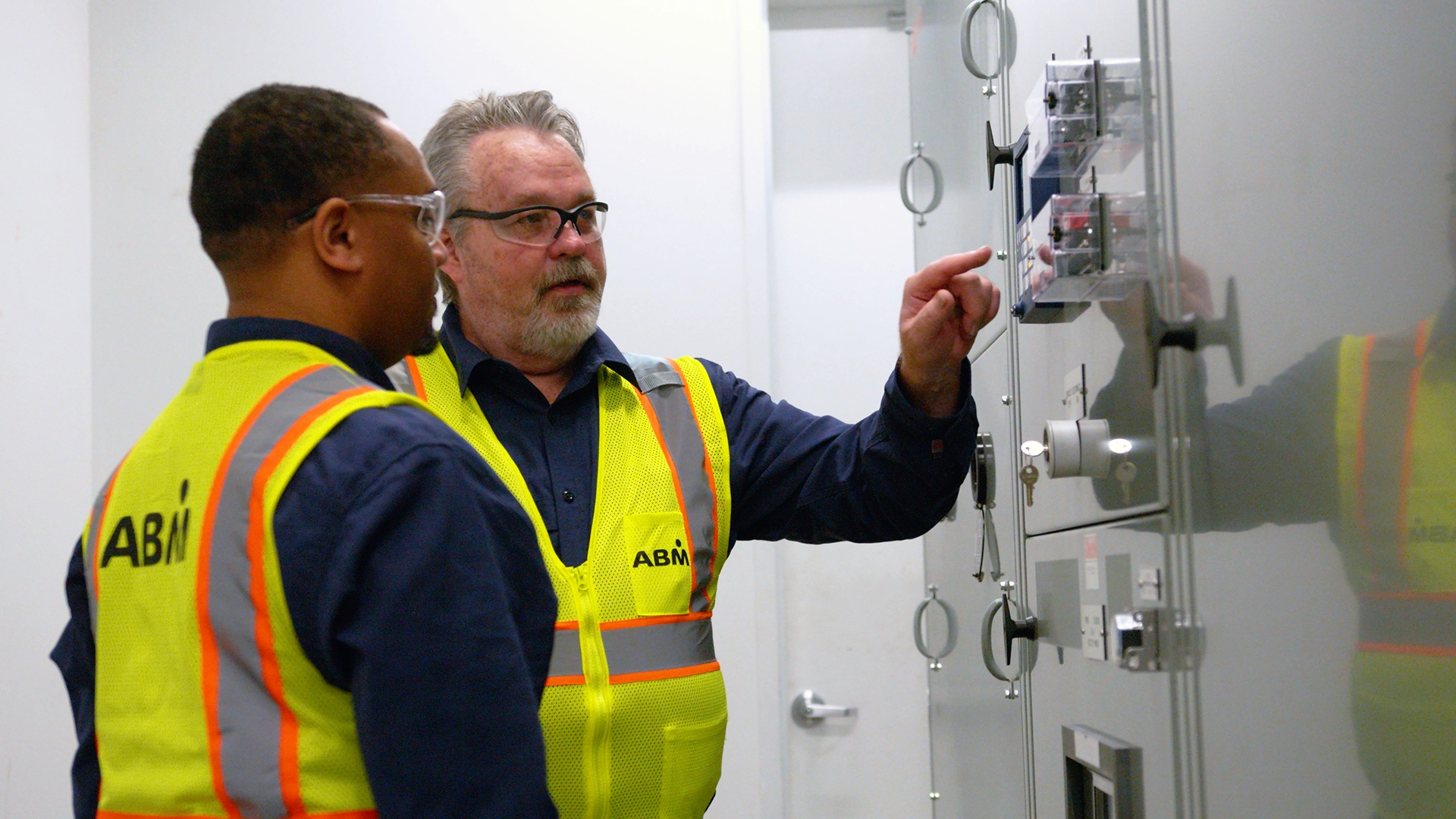
Facility maintenance teams know what to look for in the first minutes after the grid goes down. They check whether the generator starts, whether the transfer switch operates, and whether critical loads stay online. As Ryan Shaw, Senior Vice President of Operations and Maintenance for ABM Energy & Power Solutions, argues, this immediate response comes from work done long before.
"It is not really in those first five seconds that your response is important. It is in the previous five weeks and the previous five months," Shaw said. "It is in your preventative maintenance schedules and the habits you build in testing these systems so they are resilient, robust, and ready when that event comes."
Why preparation starts at the design stage
Facilities that plan for outages well in advance are better equipped to get back online faster, or avoid downtime altogether.
Mark Hawkinson, President for Technical Solutions at ABM, says power resiliency needs to be built in from day one. "I would argue that the planning starts years ahead of time," he said. "Having the right design, the right products, and a system constructed in a way that is maintainable sets the tone for what happens in the future. If that process is not done right on the front end, you are going to have failures."
Good design begins with knowing what must stay online. "It starts with understanding the critical loads, the things you cannot afford to lose," said Cody Guidry, Vice President of Sales for ABM Energy & Power Solutions. "Sometimes that is the entire facility, and sometimes it is specific loads, like the coolers in a grocery store."
What does this look like in practice? A U.S. government data center in Springfield, Virginia, suffered an outage that halted border crossings for people and commerce. After that, ABM's Mission Critical Solutions team designed and installed full power redundancy for the facility. The upgrade added new uninterruptible power supply (UPS) and generator power, along with a second, independent power path to every server rack. If any single component fails or needs to be taken offline for maintenance, the other path keeps equipment running without interruption.
Inside the hurricane readiness playbook
Few outages come with a warning, and facility design can only accomplish so much, especially in the face of major natural disasters. Hurricanes are often tracked well before landfall, and that warning is an opportunity.
"Hurricanes in particular can often be tracked about two weeks ahead of time," Shaw said. "In that window, we spin up and test every generator that could possibly be in the path. That reveals alarms and other issues, and we dispatch field service technicians to make sure those generators are ready to go."
Rather than waiting for landfall, ABM uses that window to find and fix problems while there is still time to act. The team also operates units remotely to confirm they are ready to run and verifies that each site has enough fuel to carry its load through an extended outage.
The approach has been tested under real conditions. During Hurricanes Helene and Milton, ABM tested every generator in each storm's projected path before landfall. During Helene, generators under ABM's oversight achieved 99.9% reliability, while typical outages in the region averaged 23 hours.
Preventative, reactive, and predictive maintenance
Storm preparation is the most visible form of readiness, but everyday maintenance does most of the work. Shaw distinguishes between three approaches.
"Preventative maintenance helps us prevent issues that we would otherwise have to address with reactive maintenance," he said. "Predictive maintenance lets us do preventative maintenance in a more cost-efficient and effective way, so we avoid those reactive issues and the costs that come with them."
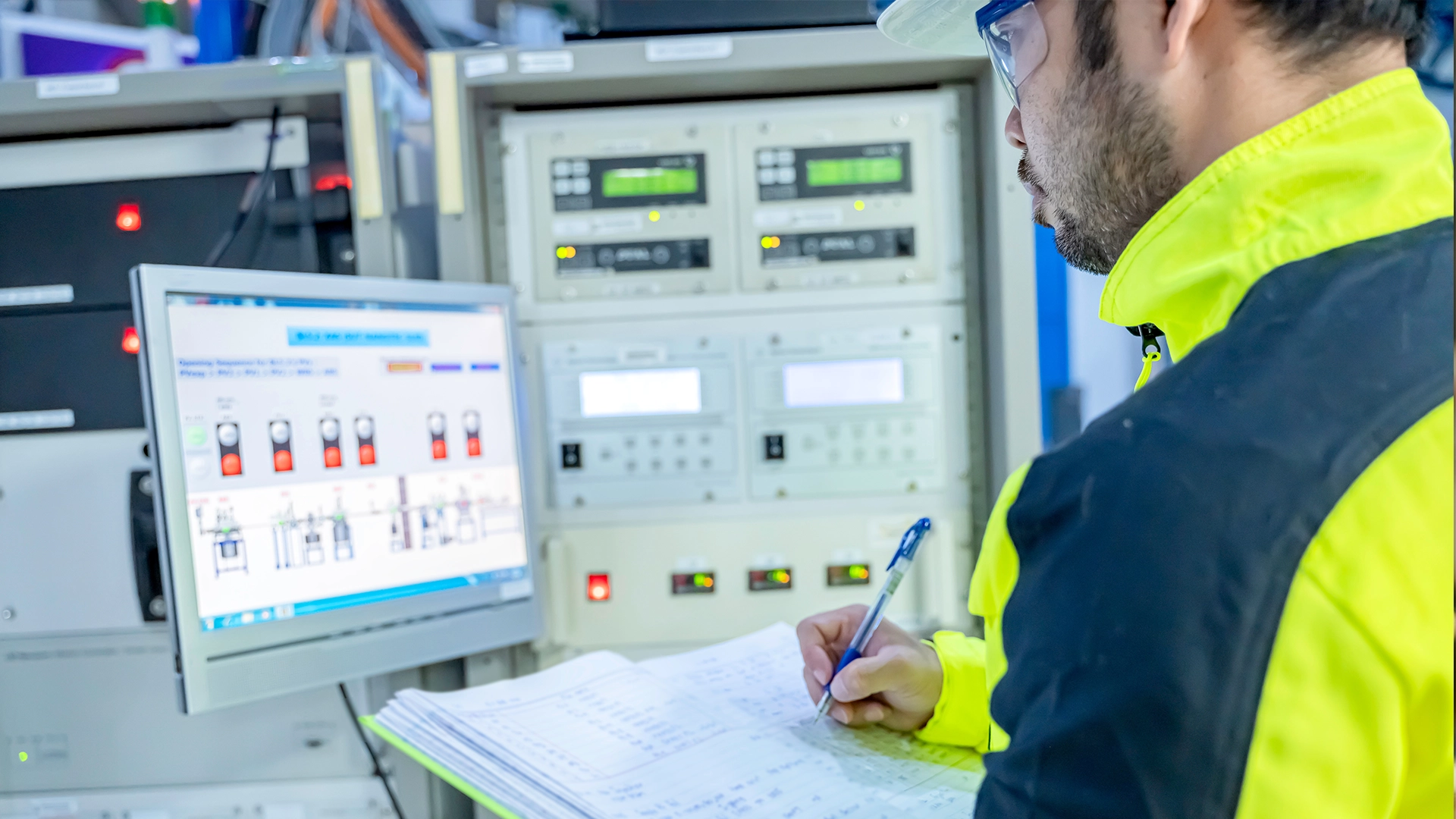
The small battery that starts a generator's engine shows how this works in practice. Battery failure is the most frequent service call for generators that fail to start, and ABM's 24/7 monitoring tracks battery health continuously. "If you use that data to determine when batteries will fail, you can replace them during an otherwise routine preventative maintenance visit and avoid the return trip," Shaw said. Otherwise, a failing battery surfaces during a test, or worse, when the generator is called on to run.
Regular testing also supports compliance. Standards such as NFPA 110 set testing and maintenance requirements for emergency and standby power systems, and consistent electrical maintenance improves both reliability and audit readiness.
Making readiness a habit
For Shaw, resilience comes down to consistency. "Maintenance is not glamorous. The habit that matters is making sure what you do today is the same thing you do tomorrow," he said. That means regular preventative maintenance, predictive scheduling where possible, and a fast response to any alarm or anomaly.
When the grid fails, a backup system has about five seconds to prove itself. Whether it does depends on everything that came before: the design decisions, the test runs, the alarms cleared, and the fuel checked. ABM's Energy and Power Operations and Maintenance teams make that preparation routine, pairing 24/7 monitoring with field technicians who act on what the data shows. The outage may be unpredictable, but the response does not have to be.
When the grid goes dark, a resilient power system has seconds to take over. In the next article in this series, Cody Guidry explains what each part of an on-site power system does and why clients do not need to become experts in the technology to get the outcome they need.
Learn more about ABM Energy and Power Solutions: https://www.abm.com/energypower