Why single-source delivery reduces power system risk


Key Takeaways
- Splitting a project across vendors creates hidden risk. When design, procurement, and construction sit with separate parties, thegaps between contracts are where problems start.
- One accountable partner protects the outcome. A turnkey model that carries through to operations and maintenance keepsevery decision tied to how the system will perform for years.
- Utility programs are changing the economics. Incentives that let utilities call on customer-sited generation are makingresilience investments easier to justify.
Transcript
In our What’s Possible panel on The Rise of Resilience, ABM experts have argued that power outages are an enterprise risk, that resilience is won months before an outage, and that the right on-site system keeps a facility running when the grid fails. One question remains: who should build that system?
Recognizing the risk of downtime, preparing for it, and understanding energy solutions are the first three steps. Choosing how the system is delivered is the final piece.
Many organizations follow a similar process when installing an alternative power solution. They hire an engineering firm to design the system, buy the equipment separately, and bring in a general contractor to build it. Each party is an expert in its own work.
Ryan Shaw, Senior Vice President of Operations and Maintenance for ABM Energy & Power Solutions, said that this model may look like specialization, but in reality works like fragmentation.
"Historically, these projects were solved with individual specialists: an engineer, a procurement person, and a general contractor," Shaw said. "It is fragmentation masquerading as specialization, and it is really difficult for the client to manage."
The hidden risk of separate contracts
Every handoff between firms is an opportunity for something to be lost, from design assumptions and equipment specifications to the reasoning behind a decision. Especially in mission critical facilities, complex failures often originate in the handoffs between vendors, not in a single component.
Mark Hawkinson, President for Technical Solutions at ABM, says that friction is inherent in the traditional way of doing things. "If you hire a third-party design firm and then a separate general contractor, conflict is inherently going to arise," he said. "Having one single point of accountability provides a more seamless process for our customers and delivers a better outcome."
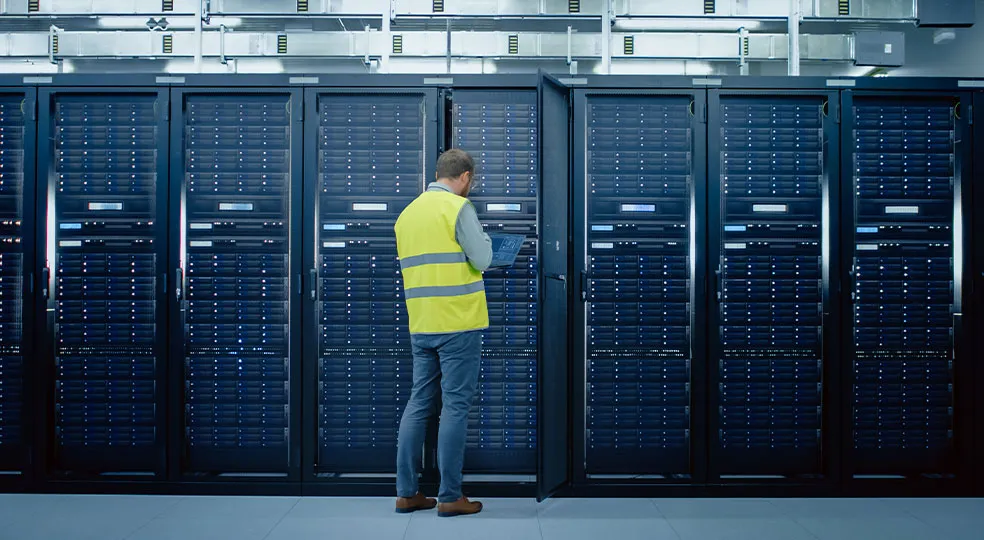
What does this look like in practice? At one commercial data center in South Texas, the client had purchased modular data center components directly from the manufacturer before bringing in ABM's Mission Critical Solutions team. The components did not fit together as delivered, so the team had to modify and adjust them on site. ABM still finished the work in six weeks against a scope of up to 14, and 15% under budget. The project succeeded, but the extra work shows what happens when procurement is separated from design and construction.
One partner from design to operations
A turnkey model keeps design, procurement, and construction under one roof. It carries accountability forward into ongoing operations and maintenance. Hawkinson says that continuity is what sets ABM apart.
"We do our in-house engineering and design, we help our clients with procurement, and we manage the construction process," he said. "Having that turnkey solution allows us to control outcomes based on what the client needs and limit the friction between handoffs."
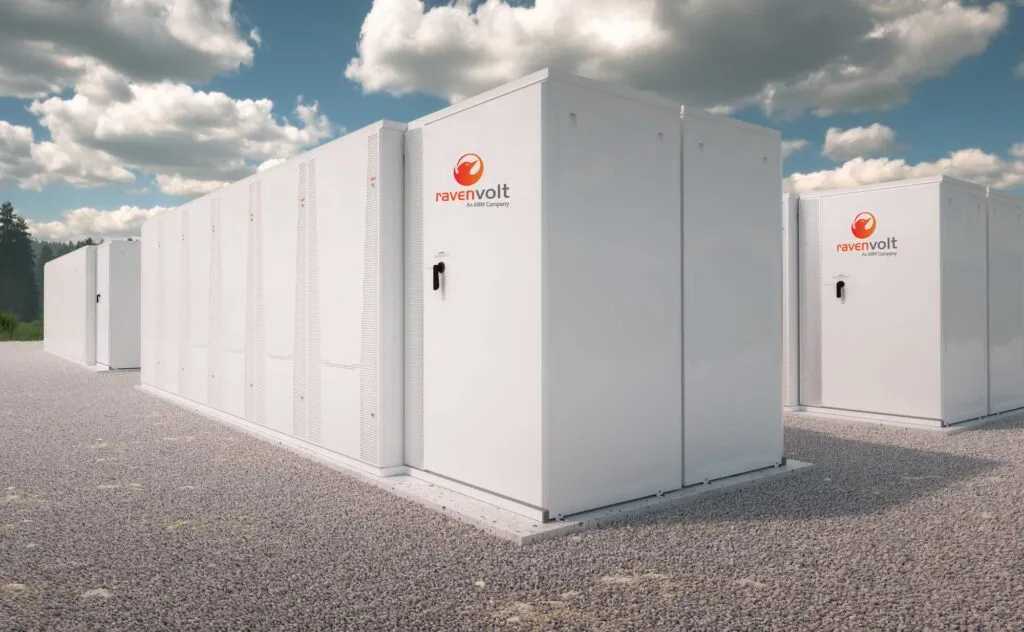
ABM RavenVolt brings in-house engineers, project managers, and construction teams to every project. It also designs its own switchgear, which Hawkinson says improves speed to market and allows each system to be tailored to the client. After commissioning, the same organization maintains and monitors the system for its full lifecycle, backed by NETA-certified electrical testing.
Likewise, when the people designing a system also build it, the design accounts for how it will actually be installed. That matters most during the tie-in, when a site is disconnected from the utility so new equipment can be connected.
"When we work for our retail clients, we are able to have much shorter tie-in windows," Shaw said. "A tie-in is the time when you break the connection between the utility and the site to insert new gear. We can do that quickly because we design the systems to be eminently constructible."
For a retailer, a shorter tie-in means less disruption to store operations and less time without utility power. It is a small detail with a direct effect on the client's business, and it only happens when engineering and construction are planned together.
Lowering the risk on return on investment
Resilience has historically been difficult to quantify on paper. A U.S. Department of Energy review notes that resilience measures on their own are often not viewed as having a strong return on investment because their value is hard to measure. Hawkinson says the right answer depends on the client.
"In the case of a retailer, it could be avoiding product loss. In the case of a data center, it is avoiding any type of disruption," he said. "Is it de-risking a portfolio of assets? Is it cost avoidance? It is really a case-by-case basis."
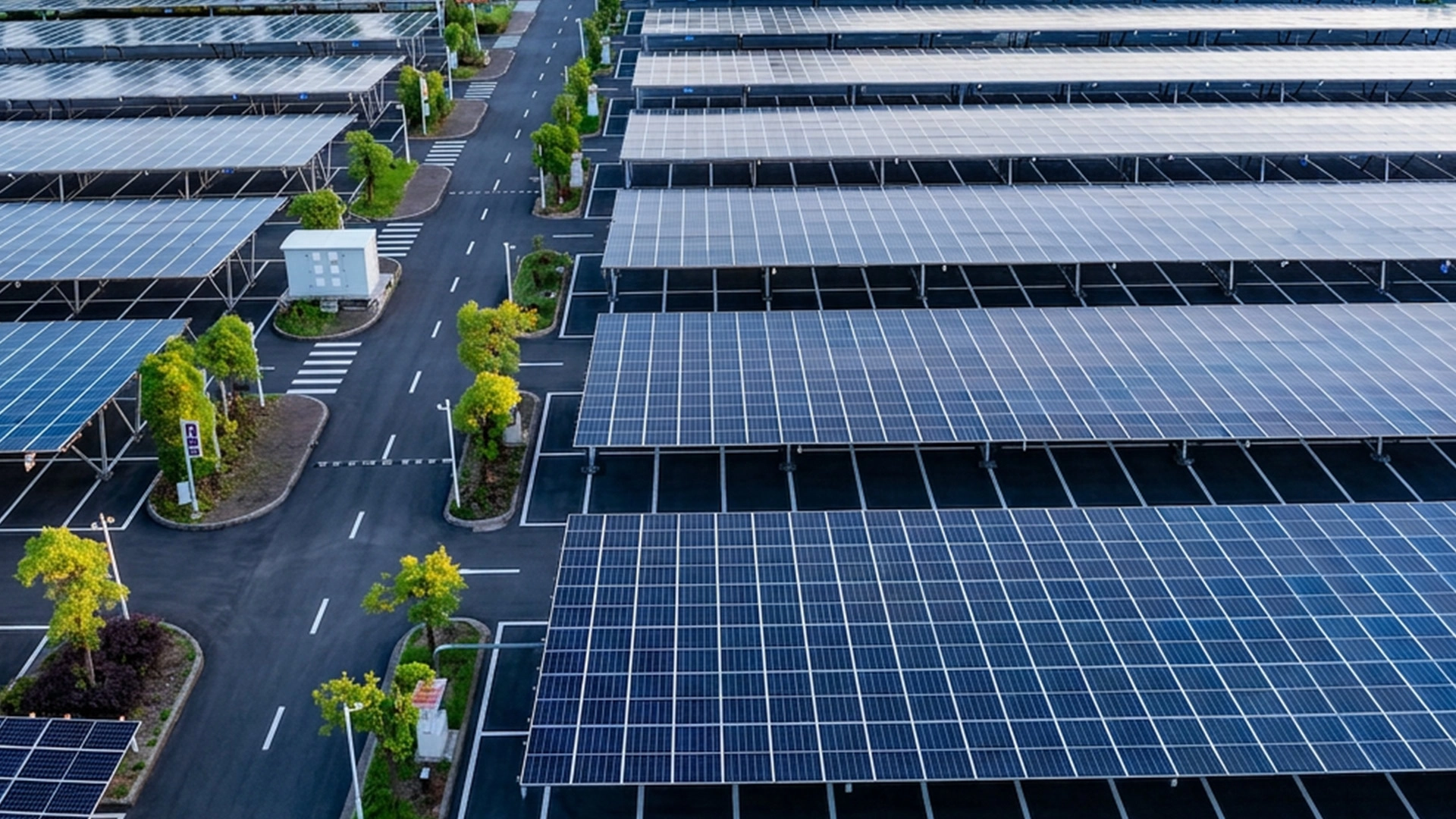
A new development is making that case clearer. Cody Guidry, Vice President of Sales for ABM Energy & Power Solutions, says utilities are increasingly creating programs that reward customers for installing on-site generation. "If the grid is down, that asset keeps the facility online. When the grid is up but short on capacity, the utility can call on it," he said. "That makes the economics and financing of these systems much more palatable, because the utility is effectively helping subsidize the cost."
Georgia Power, for example, offers programs that credit commercial and industrial customers for shifting load to their own distributed energy resources during peak demand events.
For organizations without capital set aside for resilience upgrades, ABM's Infrastructure Solutions team offers another path. The team analyzes a facility's infrastructure, energy use, and operating costs, then develops a set of improvements that generates the savings needed to pay for them. Flexible options, including funding within current operating budgets or off-balance-sheet financing, allow facilities to invest in power resilience without waiting for a new capital cycle.
Planning your resiliency strategy
The question facing business leaders is not whether to invest in energy resilience, but how fast and where to begin. For many organizations, that second question is harder. Some have not yet assessed their critical loads. Others have an engineering study on the shelf but no clear path from plan to installation.
Wherever your organization starts, a single accountable partner can guide you in the right direction. Rather than coordinating separate firms and debating equipment specifications, facility leaders can focus on what they need to protect and let one team carry the work through assessment, design, construction, and years of maintenance.
Outages are a business risk that will not go away. The grid will fail again. The facilities that keep running will be the ones with a plan, the right systems, and one partner accountable for the outcome.
Learn more about ABM Energy and Power Solutions: https://www.abm.com/energypower