Why process change matters more than the algorithm


.svg)
Key Takeaways
- Technology is only 20% of AI success in facility services; people and process make up the other 80%.
- AI in facilities delivers value only when workflows change, as ABM's robotic mower proved through continuous deployment.
- Predictive maintenance algorithms do nothing until organizations replace schedule-based labor and capital planning with data-driven decisions.
Transcript
ABM recently brought together Kayla Oliver, Head of Products, Partnerships, and Innovation, and Bob Clarke, who leads Client Experience and Operations Support, for a candid conversation on where AI is actually making a difference in facility services today. This four-part series highlights some of the most compelling ideas from that discussion, starting with the one that shapes everything else: why the technology is rarely the hard part.
Every facility leader wants the payoff that AI promises: fewer surprises, lower costs, better use of people and assets. Fewer are prepared for what actually determines whether that payoff shows up.
Kayla Oliver, Head of Products, Partnerships, and Innovation at ABM, argues the technology itself is rarely the deciding factor. "Technology is only 20% of the battle," Oliver said in ABM’s recent What’s Possible expert panel on AI and the future of facility services. "The other 80% is people and process."
The 80/20 rule is well known in other contexts, but it also explains why so many AI pilots underdeliver across the industry. The algorithm can be sound, the sensors well calibrated, and the initiative can still fail if the surrounding workflow was never redesigned to use what the technology produces.
A lawnmower that proved the point
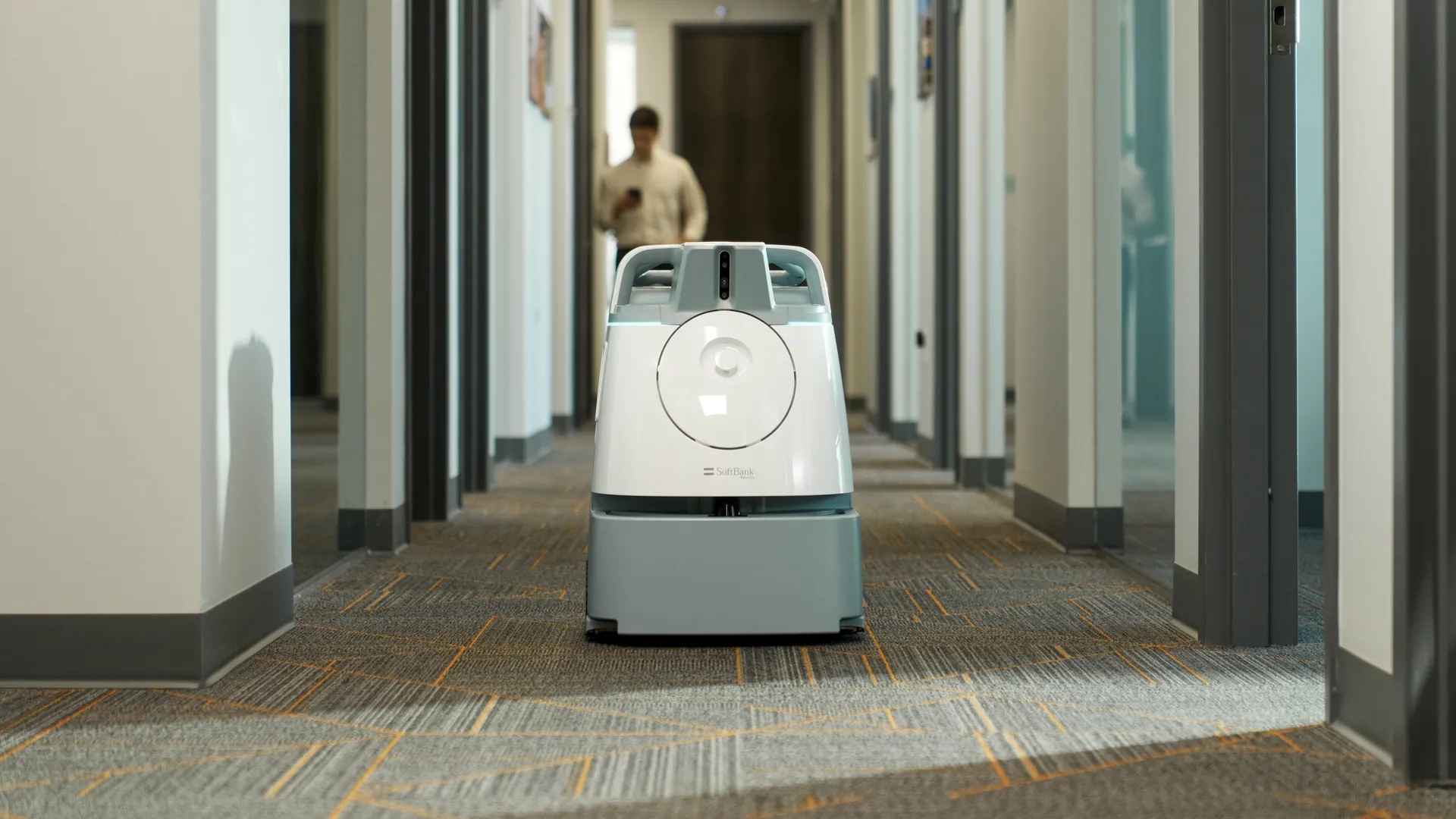
Oliver shared a prime example from an ABM-supported manufacturing site with extensive green space. Historically, ground crews mowed the lawn during a scheduled window, often outside business hours. When ABM introduced a robotic mower, the team's first instinct was to preserve that same schedule and simply swap the robot in for the crew.
It failed completely.
A robotic mower does not cut grass the way a person does. Running it on a human schedule ignored how the machine actually needed to operate. The fix was not a better robot. It was a different process: continuous deployment, where the mower works a section of lawn, returns to charge, then resumes on another section throughout the day rather than in one fixed block.
"That shift in, hey, we're going to do continuous lawn care, was really what was needed to make it valuable in that deployment," Oliver said. "When we just tried to stick it in and operate the exact same way, it failed completely to get the benefits."
The lesson generalizes well beyond landscaping. Bob Clarke, who leads Client Experience and Operations Support at ABM, made a parallel point about predictive maintenance. The algorithms behind it are only useful once an organization actually changes how it schedules labor and capital work in response.
"If you're still operating on a schedule-based system, all those algorithms are going to do nothing," Oliver added. "You do have to change the way you work to embed AI or the outputs of AI."
Oliver shared a prime example from an ABM-supported manufacturing site with extensive green space. Historically, ground crews mowed the lawn during a scheduled window, often outside business hours. When ABM introduced a robotic mower, the team's first instinct was to preserve that same schedule and simply swap the robot in for the crew.
It failed completely.
A robotic mower does not cut grass the way a person does. Running it on a human schedule ignored how the machine actually needed to operate. The fix was not a better robot. It was a different process: continuous deployment, where the mower works a section of lawn, returns to charge, then resumes on another section throughout the day rather than in one fixed block.
"That shift in, hey, we're going to do continuous lawn care, was really what was needed to make it valuable in that deployment," Oliver said. "When we just tried to stick it in and operate the exact same way, it failed completely to get the benefits."
The lesson generalizes well beyond landscaping. Bob Clarke, who leads Client Experience and Operations Support at ABM, made a parallel point about predictive maintenance. The algorithms behind it are only useful once an organization actually changes how it schedules labor and capital work in response.
"If you're still operating on a schedule-based system, all those algorithms are going to do nothing," Oliver added. "You do have to change the way you work to embed AI or the outputs of AI."
Governance and data readiness are part of the 80%
It is not just about adapting or reconfiguring workflows. The process change that leads to AI success extends to how an organization governs and prepares its data before it goes near an algorithm.
AI data readiness requires prioritizing reliable inputs, strengthening governance with clear validation rules and data ownership, and aligning AI projects to specific, measurable problems. Skipping that groundwork, even with strong technology in place, is one of the most common ways facility AI initiatives lose momentum.
That discipline matters more as facilities generate more data from more sources. Oliver describes the trajectory clearly. Buildings are becoming ecosystems of interconnected data, pulling from CMMS platforms, energy systems, occupancy sensors, and more. AI makes that data usable, but only if the organization has already built the discipline to manage it well.
People remain the constant
No matter how much data a facility gathers or how advanced the algorithms become, the human element is the core component of facility operational success. Oliver and Clarke argue that AI is designed to extend what teams can do, not replace the judgment they bring. Robots do not replace the people who redesign the workflow around them. Algorithms do not replace the leaders who decide what problem is actually worth solving.
The organizations that get the most from AI are not necessarily the ones with the most advanced technology. They are the ones willing to do the less glamorous work first: rethinking the process, training the team, and building the data foundation the algorithm depends on. Get that 80% right, and the technology tends to take care of itself.
Up next: Aviation has become one of the earliest and most mature adopters of AI-driven, demand-based operations. Part two in this series looks at what airports can teach every other facility type about moving from fixed schedules to real-time, demand-based service.




%20(1).webp)

.webp)